

Prof. Dr. Hendrik Streeck
Germany
Virologist
DAAD One-Year Postdoc Scholarship 2007-2008
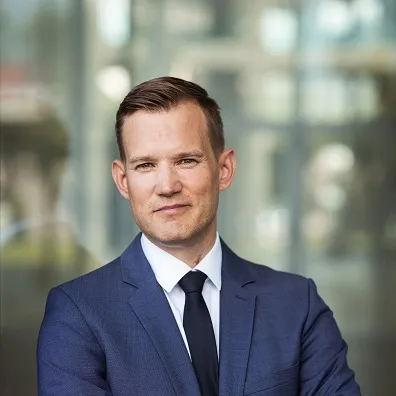
Prof. Dr. Hendrik Streeck
© privat
The coronavirus pandemic has changed the lives of numerous people, including that of Professor Hendrik Streeck. Hardly had he taken over as head of the Institute of Virology at the University Hospital Bonn in October 2019 than more and more people in the Chinese city of Wuhan began contracting a previously unknown lung disease. “Initially I had hoped that China would succeed in containing the epidemic”, recalls Streeck, whose research focuses on HIV and emerging viruses. “However, when the first cases of Sars-CoV-2 appeared in the USA, it was clear to me that Germany would also be affected.”
“The DAAD scholarship was a great opportunity for me, and I took full advantage of it.” – Hendrik Streeck
When a carnival meeting in the Heinsberg district in North Rhine-Westphalia led to a massive outbreak of the virus in late February 2020, Streeck and a team of researchers from the University of Bonn travelled to the hotspot and quickly undertook a scientific analysis of the outbreak. His Heinsberg study, which came to be widely used as a reference source, provided important early findings about infection rates, especially about the hidden numbers of infections and about the lethal nature of the virus. “There was very great public interest in this”, Streeck recounts. In his book “Hotspot. Leben mit dem neuen Coronavirus” (Hotspot. Living with the new coronavirus), which was published in February 2021, the virologist details his approach and explains infection paths and the effects on the immune system. “I reveal how complex our work is and how research is done.”
Media interest remains considerable: besides research and clinical diagnostics, Streeck’s days are dominated by appearances on chat shows and interviews. A specialist in microbiology, virology and infection epidemiology, he is also a member of the “Coronavirus Expert Council” that advises the State Government of North Rhine-Westphalia. “Coronavirus is here to stay, so we need to develop a long-term strategy with the help of interdisciplinary research”, believes Streeck. “At the same time, we must not lose sight of other viruses. For fear of catching Covid, numerous HIV patients around the world have not been going to hospital to have their viral load checked; this may result in resistances to HIV drugs.”
Living in a pandemic and with its risks for other areas is one field of research for the scientist, who has already devised HIV prevention and vaccine strategies. “Because of various parallels, HIV experts around the world are leading the way in coronavirus research”, says Streeck. “This is not only about finding solutions during a pandemic, but also about approaches that are used when tackling HIV and can now be applied to Sars-CoV-2.”
His work at Harvard Medical School in Boston, funded by the DAAD with a one-year postdoc scholarship in 2007 and 2008, played a key role in his decision to specialise in HIV. “While doing my PhD at the University of Bonn, I was already engaged in close exchange with the American scientists and wanted to intensify this with a research project on HIV-specific T helper cells”, says the virologist. “The DAAD scholarship provided me with the opportunity to do this.” Streeck showed great commitment, and just a year later was working as instructor in medicine and then, from 2011, as assistant professor at Harvard Medical School. In addition, he won the 2009 research award of the German AIDS Society. In 2012 he moved to the Walter Reed Army Institute of Research, where he was head of immunology for the U. S. Military HIV Research Program. At the same time, he held a teaching position at the Bloomberg School of Public Health of Johns Hopkins University.
The scientist was tempted back to Germany in 2015: Hendrik Streeck accepted a chair at the University of Essen, where he founded the Institute for HIV Research whose work he continues as director of the Institute of Virology at the University Hospital Bonn. Since 2019 he has additionally chaired the Board of Trustees of the German AIDS Foundation and is organising the world’s largest HIV conference of the International AIDS Society (IAS) in July 2021 in Berlin. At the same time, he is continuing to work on expanding the Heinsberg study: “We are especially interested in the question of how long immunity lasts following infection with coronavirus.”
Status: April 2021