

Two students in library

CHE University Ranking

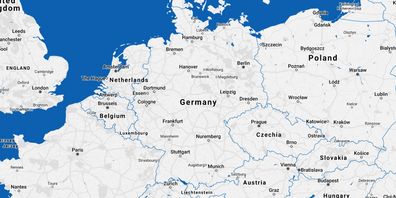
Map of Germany

Activate DAAD map

To activate the map, click on the "Show map" button. We would like to point out that data will be transmitted to OpenStreetMap after activation. You can find out more in our privacy policy. You can revoke your consent to the transmission of data at any time.

Map material from the free geographic information system OpenStreetMap. The DAAD explicitly does not adopt the information provided there (names, boundaries, etc.) in every case. No guarantee is given for the accuracy of this information.

Legend:

  • Department

Basic information

Total number of students at the department

650

Number of master degree students (w/o teacher qualification)

70

Support during the study entry phase

Total score for support in the study entry phase

12/16 points

International orientation

Outgoing students

no data

Job market- and career-orientation

Percentage of teaching by practitioners

10.0%

Percentage of teaching by practitioners, master's

no data

Bachelor theses in cooperation with work environment

39.8%

Master theses in cooperation with work environment

56.3%

Research

Cooperative doctoral degrees (in three years)

no data

Not specified
Third party funds per professor

31,000 €

Students' assessments on undergraduate, presence-learning-courses

Learning and working spaces

Teacher support

Support in studies

Courses offered

Study organisation

Exam organisation

Digital teaching elements

Laboratory internships

Introduction to scientific work

Offers for career orientation

Support during practical semester

Practical orientation in teaching

Support for stays abroad

Rooms

Library

IT-infrastructure

Overall study situation

Return rate of the questionnaires

no data

Further information provided by the department

Special features regarding teaching in the bachelor's degree programme

The Bachelor's degree programmes in the Department of Electrical Engineering are characterised by modern, well-equipped laboratories, which offer an optimal learning environment, especially for basic studies. Highly specialised laboratories, including microelectronics, drive and propulsion engineering, networks and high-voltage engineering, enable in-depth expertise and practice-oriented research. Teaching is practice-oriented and closely linked to current scientific and industrial developments. The #StartIng project offers a student-oriented support programme that facilitates the start of studies and provides targeted support.

Special features regarding teaching in the master's programmes

The broad-based Master's degree programme is defined by its scientific depth and specialisation. Students can opt to focus on the four areas of specialisation drive system engineering, electronics and sensor technology, energy system technology and the power industry. Practice-oriented research and development work is of particular importance throughout the degree course. The highly project-oriented nature of the degree course makes it particularly relevant and highlights the need for a professional exchange at national and international level.

Special features regarding the international orientation

The department and the university attach great importance to the integration of international students and cooperation with partner universities. In order to exploit synergy effects, the placement of these activities at university level and thus across departments has proven successful. The degree courses offered by the Department of Electrical Engineering are in high demand by international students. Intensive student support is provided by the International Office of Dortmund University of Applied Sciences.

Special features regarding the equipment

The department has state-of-the-art technical equipment that supports a wide range of research and teaching. Even the equipment of the basic laboratory is of the highest standard. The laboratories range from high-voltage engineering, drive system technology and control technology to the field of microelectronics and chip development. Our modern equipment, from large-scale devices (high-voltage engineering) to the production of microchips, includes all essential components and equipment from professional practice in electrical engineering.

Special features regarding research and development

The department is characterised by a high level of research activity in forward-looking projects. This includes "kV-Batt", which develops a battery system with very high system voltage. Another highlight is "FHDo-ATLAS-FIS", which explores the development of integrated voltage regulators for hybrid detectors of the ATLAS and CMS experiment. The "DIANEpro" project optimises sustainability in industrial production through data-based analysis of energy flows. In addition, numerous projects are underway in the field of (micro)electronics, which make the department particularly innovative.

Other special features

The women's project laboratory is a special facility of the department developed specifically to promote women in STEM subjects. This unique platform offers (prospective) female students the opportunity to work on projects in a supportive environment, gain practical experience and deepen their technical skills. In addition, the laboratory promotes exchange and networking among female students in order to strengthen equal opportunities in technical professions in the long term. This initiative underlines the department's commitment to diversity.

Further information about study entry phase

Website of the Student Council

Legend

Groups

green

top group

yellow

middle group

red

bottom group
Not specified
not specified

Acronyms

(S) = Students' judgements

(F) = Facts

(P) = Professors' judgements

Units

Value in percent

Value in points

Euro

Thousand Euro

Last Update 2025: Data collected by the CHE Center for Higher Education