


CHE University Ranking
Filter for projects
Electrical / Information Engineering, Department
Fachbereich 1: Ingenieurwissenschaften - Energie und Information
Hochschule für Technik und Wirtschaft Berlin
Fachbereich 1: Ingenieurwissenschaften - Energie und Information
Wilhelminenhofstraße 75A
D-12459 Berlin
Telephone: +49 30 5019-2111
https://www.htw-berlin.de
HTW Berlin
Department on the internet
Online application
Student body
Wilhelminenhofstraße 75A
D-12459 Berlin
Telephone: +49 30 5019-2111
https://www.htw-berlin.de
HTW Berlin
Department on the internet
Online application
Student body
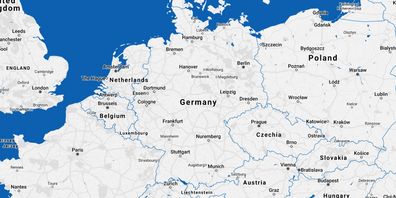
Map material from the free geographic information system OpenStreetMap. The DAAD explicitly does not adopt the information provided there (names, boundaries, etc.) in every case. No guarantee is given for the accuracy of this information.
Legend:
- Department
Basic information
- Total number of students at the department
1,510
- Number of master degree students (w/o teacher qualification)
270
- Percentage of teaching by practitioners
35.8%
- Percentage of teaching by practitioners, master's
38.4%
Support during the study entry phase
- Total score for support in the study entry phase
14/14 points
Job market- and career-orientation
- Bachelor theses in cooperation with work environment
55.7%
- Master theses in cooperation with work environment
50.4%
Research
- Cooperative doctoral degrees (in three years)
47
- Third party funds per professor
64,300 €
Students' assessments on undergraduate, presence-learning-courses
- Teacher support
- Support in studies
- Courses offered
- Study organisation
- Exam organisation
- Digital teaching elements
- Laboratory internships
- Offers for career orientation
- Support during practical semester
- Rooms
- Library
- IT-infrastructure
- Overall study situation
- Return rate of the questionnaires
113
Students' assessments on consecutive master's degree courses
- Teacher support
- Support in studies
- Digital teaching elements
- Courses offered
- Study organisation
- Transition to Master's studies
- Overall study situation
- Return rate of the questionnaires
32
Further information provided by the department
Special features regarding teaching
The initial study phase of the degree course makes it possible for students to become familiar with all of the degree courses offered in the department. Projects that span degree courses exist both for first semester students and for later semesters. The mutual eligibility of the basic subjects for recognition is guaranteed across all degree courses. Recognition of mandatory subjects from other courses is possible in the mandatory elective area. There is a high proportion of practical laboratory exercises spanning all degree courses, and networking in the Berlin research landscape is excellent.
Special features regarding the international orientation
Semesters abroad encouraged thanks to a "mobility semester" in which a high proportion or all of the courses offered are optional required subjects that can be replaced by credits from abroad. Vibrant students exchange especially with Spain and the Scandinavian countries. English language courses in the category of optional required subjects. English-language courses on "Internationalisation at home".
Special features regarding the equipment
Very good laboratory equipment overall; Five degree complex laboratories (Physics, Materials, Measurement Technology, Electrical and Electronic Engineering, Computer Science) for all degree courses and 20 basic laboratories; Lab use possible and advisable outside of the courses possible within the scope of project work.
Special features regarding research and development
In 2014 the department was one of the two university departments with the most third-party funding with approx. EUR 2 million. The ratio of professors involved in research is high. Research activities take place in all ranked degree courses. The Helmholtz-Zentrum Berlin für Materialien und Energie (Helmholtz Centre Berlin for Materials and Energy) has established two special professorships in the department (a third is in the planning stage) which link the research activities of both institutions. A large number of research projects are funded by BMWI, BMBF and DFG.
Support for founders
The HTW offers modules on the topic of "Entrepreneurship" as supplementary subjects. Business start-ups are also supported by a wide range of workshops, advice from the HTW's Start-Up Competence Centre, a prototyping workshop and a summer university programme on this topic. In the BIT6 network of six Berlin universities of applied sciences, the HTW supports the exchange between science and practice through innovative measures such as the start-up centre for newly set up companies or the "Transfermobil" service.
Other special features
The department of electronics-related courses is integrated in the largest of Berlin's universities of applied sciences with a wide range of courses from technology, economics and computer science to design and culture, offering many unusual opportunities for interdisciplinary studies.
Further information on research activities
Further information about study entry phase
Information on access restrictions
Legend
Groups
green
yellow
blue
not specified
Acronyms
(S) = Students' judgements
(F) = Facts
(P) = Professors' judgements
Units
Value in percent
Value in points
Euro
Thousand Euro
Last Update 2022: Data collected by the
CHE Center for Higher Education
