


Civil and Environmental Engineering, Department
Fachbereich 1: Architektur - Bauingenieurwesen - Geomatik
Frankfurt University of Applied Sciences
Fachbereich 1: Architektur - Bauingenieurwesen - Geomatik
Lehreinheit Bauingenieurwesen
Nibelungenplatz 1
D-60318 Frankfurt am Main
Telephone: +49 691 533-0
https://www.frankfurt-university.de
Frankfurt UAS
Department on the internet
Lehreinheit Bauingenieurwesen
Nibelungenplatz 1
D-60318 Frankfurt am Main
Telephone: +49 691 533-0
https://www.frankfurt-university.de
Frankfurt UAS
Department on the internet
Degree courses with details
- Civil Engineering (B.Eng.)
- Civil Engineering (B.Eng., cooperate education)
- Real Estate und Facility Management (B.Sc.)
- Real Estate and Integral Building Technology (B.Eng.)
- Sustainable Structures (M.Eng.)
- Facility und Real Estate Management (M.Sc.)
- Infrastructure and Environmental Studies (B.Eng.)
- Infrastructure Management - Water and Traffic (M.Eng.)
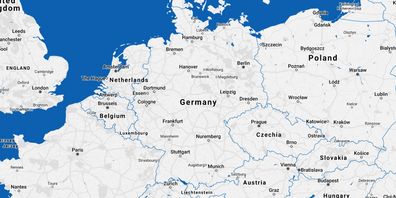
Map material from the free geographic information system OpenStreetMap. The DAAD explicitly does not adopt the information provided there (names, boundaries, etc.) in every case. No guarantee is given for the accuracy of this information.
Legend:
- Department
Basic information
- Teaching staff at the department
24
- Percentage of teaching by practitioners
17.1%
- Percentage of teaching by practitioners, master's
7.6%
Teaching in core subjects
- Basics (e.g., maths): 11.5%
- Construction Engineering: 33.3%
- Water Management: 8.3%
- Ressource Management: 8.3%
- Transport Systems, Urban and Regional planning: 24%
- Construction Management: 12.5%
- Other fields: 2.1%
Cooperative Education
- Students in cooperative education
60
Support during the study entry phase
- Total score for support in the study entry phase
11/14 points
Job market- and career-orientation
- Bachelor theses in cooperation with work environment
no data
- Master theses in cooperation with work environment
no data
- Professors with own engineering company
30.0%
Research
- Cooperative doctoral degrees (in three years)
3
- Third party funds per professor
47,800 €
Further information provided by the department
Special features regarding teaching
Relevance to real-life practice/application of teaching content + student projects; numerous excursions, workshops and competitions (engineering project in Germany/abroad, participation in International Project Week with 6 partner universities); each semester, there are expert forums + lecture series at the interface between research and science ‘Frankfurt High-Rise Days’ [‘Frankfurter Hochhaustage’]; Close personal contact to the teaching staff, individually focused student supervision in learning/seminar groups; extensive didactic use and promotion of E-Learning.. Cooperation study programme in Infrastructure – Water and Land Transport (THM Mittelhessen)
Special features regarding the international orientation
Support for studies abroad, intensive contacts maintained with 37 partner universities, a postgraduate Master's degree course in Urban Agglomerations is taught entirely in English for the target group of foreign students, with integrated study visit abroad at a global partner university in the portfolio of the department, many international projects, workshops, excursions, scholarship/exchange programmes, e.g. from Hong Kong to Shanghai; Brazil, Eastern Europe. Truly international through students from over 100 countries.
Special features regarding the equipment
More than 280 PC workstations; A4 laser printer; 6 A0 plotters, 2 A3+1 A0 scanner projectors in all classrooms; Free software and working directory use for students; All software can be used from all workstations; WiFi network; E-learning portal; Additional computers in the library + self-learning centre+DV(110); Central library: 2 A-3 book scanners, copying and printing facilities. Laboratory for building materials, building physics + building preservation; Laboratory for soil mechanics + foundation engineering; Water testing laboratory; Road construction laboratory; Plans for digitisation with virtual machines
Special features regarding research and development
The Frankfurt Research Institute for Architecture / Civil Engineering / Geomatics (FFin) stands for research competence in planning, construction and operation in the Frankfurt Rhine-Main conurbation. The current specialist groups of the FFin are: New mobility / rapid planning / textile lightweight construction / EE land management / municipal policy as e-gaming / Sirene / post-war modernism. With its planning and construction-related disciplines, the FFin demonstrates a special social responsibility for sustainable structural development and the well-being of people in urban and rural areas
Support for founders
2 contact persons in the field of research for start-ups, own Master’s degree programme on the topic of ‘Entrepreneurship and Business Development’ (Department 3), own Institute for Entrepreneurship (IFE): IFE is the substantive point of contact for the EXIST programme of the BMWi. Start-up advisory services in cooperation with Die Wirtschaftspaten e.V.; Support through start-up support and competitions
Other special features
Offers of the centre for technical language; Self-learning centre with work rooms, PC pools, reference library and café; 2 student union campus cafés; Central library and group work rooms: over 210,180 books, over 307 journal subscriptions, more than 82,072 e-Media; Job portal for students and alumni; Doctorate funding, mentor network, families office, child care; Research-oriented children's nursery; accessibility; IT services campus; Campus+: Culture, big band, university choir; Contributions by students, sustainability strategy
Further information on research activities
Information on access restrictions
Website of the Student Council
online-application
Civil Engineering
Facts
- Total number of students at the department
1,310
- Number of master degree students (w/o teacher qualification)
110
Environmental Civil Engineering
Facts
- Total number of students at the department
60
- Number of master degree students (w/o teacher qualification)
60
Legend
Groups
green
yellow
red
not specified
Acronyms
(S) = Students' judgements
(F) = Facts
(P) = Professors' judgements
CE = Civil Engineering
EnvCE = Environmental Civil Engineering
Units
Value in percent
Value in points
Euro
Thousand Euro
Last Update 2022: Data collected by the
CHE Center for Higher Education
