


Civil and Environmental Engineering, Department
Studiendekanat Bauwesen
Technische Universität Hamburg
Studiendekanat Bauwesen
Denickestraße 17L
D-21071 Hamburg
Telephone: +49 40 42878-3122
https://www.tuhh.de
TU Hamburg
Department on the internet
Denickestraße 17L
D-21071 Hamburg
Telephone: +49 40 42878-3122
https://www.tuhh.de
TU Hamburg
Department on the internet
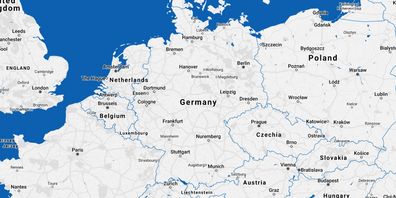
Map material from the free geographic information system OpenStreetMap. The DAAD explicitly does not adopt the information provided there (names, boundaries, etc.) in every case. No guarantee is given for the accuracy of this information.
Legend:
- Department
Basic information
- Teaching staff at the department
46
- Percentage of teaching by practitioners
6.3%
- Percentage of teaching by practitioners, master's
6.5%
Teaching in core subjects
- Basics (e.g., maths): 17.5%
- Construction Engineering: 19.7%
- Water Management: 39.6%
- Ressource Management: 0%
- Transport Systems, Urban and Regional planning: 0%
- Construction Management: 17.5%
- Other fields: 5.6%
Support during the study entry phase
- Total score for support in the study entry phase
10/14 points
Job market- and career-orientation
- Bachelor theses in cooperation with work environment
no data
- Master theses in cooperation with work environment
no data
- Share of professors with work experience
40.0%
- Professors with own engineering company
20.0%
Research
- Third party funds per academic
65,700 €
- Doctorates per professor
0.8
Further information provided by the department
Special features regarding teaching
TU Hamburg has a long tradition of linking Civil Engineering and Environmental Engineering, which is reflected in the provision of two specialist Master's courses. The various in-depth study areas and specialisations in the Master's courses represent the focal areas of research at the School of Civil Engineering's institutes and enable in-depth academic study in both areas. It is therefore possible to face the global and regional challenges of shaping our environment and society.
Special features regarding the international orientation
The School of Civil Engineering cooperates with more than 50 international partner universities worldwide in research and teaching so as to enable all interested students to spend a qualified period of time studying abroad. Specialist supervision for exchange students is provided by a dedicated advisory office within the department. The broad range of courses in English, internationally oriented course content as well as the international Master's courses also attract a large number of international students, especially from China, followed by Mexico and India.
Special features regarding the equipment
The labs in the individual institutes are equipped with state-of-the-art equipment which is used for teaching and research. In teaching, this equipment is firstly used to conduct experiments in line with lectures and, secondly, the lab facilities are available for use when writing Bachelor's and Master's theses. The laboratories are open all day and can also be used at the weekend or late in the evening on request. Students have access to PC workstations for producing documentation or performing simulated calculations, etc.
Special features regarding research activities
The research activities are characterised by a broad scope. They range from Sewage Management, Bridge and Underground Construction and Environmental Engineering through to the key research areas of "Buildings in and on Water" and "Climate-Friendly Energy and Environmental Engineering". In addition to the basic research, a large proportion of the projects have a direct link to practice.
Support for founders
The Startup Dock start-up centre initiated by the TUHH has been supporting innovative startups from the university sector since 2013. Startup Dock advises and supports students, scientists and alumni of Hamburg's universities and research institutions in the realisation of their technological and knowledge-based business ideas. With individual coaching and one-on-one support as well as teaching and training sessions, it provides the teams involved with the support they need during the early stage of their company start-up.
Other special features
Since 2003, TUHH has been the first technical university in Germany to offer a dual course of study under the title of dual@TUHH in cooperation with NORDMETALL. The programme combines theory at university level with practice in renowned industrial companies in northern Germany and is supplemented by exclusive social competence seminars. dual@TUHH students gain a full engineering degree at the TUHH and can complete their studies with a bachelor’s of science degree (6 semesters) or an optional master's of science degree (4 semesters).
Further information on research activities
Further information about study entry phase
Information on access restrictions
Website of the Student Council
online-application
Civil Engineering
Facts
- Total number of students at the department
190
- Number of master degree students (w/o teacher qualification)
190
Students' assessments on consecutive master's degree courses
- Teacher support
- Support in studies
- Digital teaching elements
- Courses offered
- Study organisation
- Transition to Master's studies
- Research orientation
- Overall study situation
no data
- Return rate of the questionnaires
29
Environmental Civil Engineering
Facts
- Total number of students at the department
710
- Number of master degree students (w/o teacher qualification)
130
Students' assessments on undergraduate, presence-learning-courses
- Teacher support
- Support in studies
- Courses offered
- Study organisation
- Exam organisation
- Digital teaching elements
- Research orientation
- Offers for career orientation
- Rooms
- Library
- IT-infrastructure
- Overall study situation
- Return rate of the questionnaires
56
Legend
Groups
green
yellow
red
not specified
Acronyms
(S) = Students' judgements
(F) = Facts
(P) = Professors' judgements
CE = Civil Engineering
EnvCE = Environmental Civil Engineering
Units
Value in percent
Value in points
Euro
Thousand Euro
Last Update 2022: Data collected by the
CHE Center for Higher Education
