


Civil and Environmental Engineering, Department
Fakultät für Ingenieurwissenschaften
Universität Duisburg-Essen
Fakultät für Ingenieurwissenschaften
Abteilung Bauwissenschaften
Universitätsstraße 15
D-45117 Essen
Telephone: +49 201 183-2775
https://www.uni-due.de
Uni Duisburg-Essen/Essen
Department on the internet
Abteilung Bauwissenschaften
Universitätsstraße 15
D-45117 Essen
Telephone: +49 201 183-2775
https://www.uni-due.de
Uni Duisburg-Essen/Essen
Department on the internet
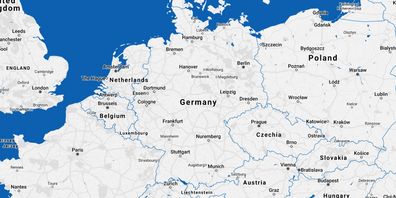
Map material from the free geographic information system OpenStreetMap. The DAAD explicitly does not adopt the information provided there (names, boundaries, etc.) in every case. No guarantee is given for the accuracy of this information.
Legend:
- Department
Basic information
- Teaching staff at the department
57
- Percentage of teaching by practitioners
10.0%
- Percentage of teaching by practitioners, master's
30.0%
Teaching in core subjects
- Basics (e.g., maths): 38.6%
- Construction Engineering: 21.1%
- Water Management: 17.5%
- Ressource Management: 1.8%
- Transport Systems, Urban and Regional planning: 8.8%
- Construction Management: 8.8%
- Other fields: 3.5%
Support during the study entry phase
- Total score for support in the study entry phase
13/14 points
Job market- and career-orientation
- Bachelor theses in cooperation with work environment
50.2%
- Master theses in cooperation with work environment
50.0%
- Share of professors with work experience
50.0%
- Professors with own engineering company
20.0%
Research
- Third party funds per academic
42,800 €
- Doctorates per professor
1.1
Further information provided by the department
Special features regarding teaching
Construction learning centre with fixed times in the timetable for intensive preliminary and follow-up support; Course of study with compulsory attendance in four-day week; E-Learning; International exchange programmes; high degree of internationality of students; change to part-time study possible; mentoring at the start of studies and after the fourth semester regarding the choice of specialisation courses; quality assurance through evaluation of teaching in each semester and "Building Science Advisory Board" made up of industry representatives.
Special features regarding the international orientation
high degree of internationality of students; international Civil Engineering degree course; international exchange programmes via Erasmus and double degrees.
Special features regarding the equipment
Simultaneous computers / cluster; computer room with approx. 50 PCs for lectures and research papers; PC-based examinations with 200 PCs; large laboratory areas in the field of Solid Construction, Materials Science and Road Construction, Steel Construction, Community Water Management and Waste, as well as Hydraulic Engineering.
Special features regarding research activities
Interdisciplinary focal areas "Urban Systems" and "Future Water"; high-tech materials for the shift towards alternative energy; Bionics; material chain; dark fermentation; Electromobility; renewable energy concepts; research focus on Building Information Modelling (BIM); automated manufacturing processes in the building industry; development of economical sustainability concepts in the area of building and materials science; Climate Protection; building with steel and glass; dynamic soil/building structure interaction; wave propagation; renaturation measures; Hydropower station
Other special features
In addition to their degree courses in Duisburg/Essen, it is helpful for students of the Department of Building Sciences to study abroad for one or two semesters. To this end, the University of Duisburg-Essen has concluded contracts with other universities in Europe in order to give students from Duisburg/Essen the opportunity to study abroad as part of the ERASMUS programme – and vice versa. The Erasmus coordinator for the Department of Building Sciences is Professor Lupascu. The PROMOS and DUE-Mobil grants give students an opportunity to receive financial support.
Further information on research activities
Website of the Student Council
online-application
Civil Engineering
Facts
- Total number of students at the department
1,830
- Number of master degree students (w/o teacher qualification)
760
Students' assessments on consecutive master's degree courses
- Teacher support
no data
- Support in studies
no data
- Digital teaching elements
no data
- Courses offered
no data
- Study organisation
no data
- Transition to Master's studies
no data
- Research orientation
no data
- Overall study situation
no data
- Return rate of the questionnaires
49
Legend
Groups
green
yellow
red
not specified
Acronyms
(S) = Students' judgements
(F) = Facts
(P) = Professors' judgements
CE = Civil Engineering
Units
Value in percent
Value in points
Euro
Thousand Euro
Last Update 2022: Data collected by the
CHE Center for Higher Education
