


Civil and Environmental Engineering, Department
Fakultät Architektur und Bauingenieurwesen
Technische Universität Dortmund
Fakultät Architektur und Bauingenieurwesen
August-Schmidt-Straße 8
D-44227 Dortmund
Telephone: +49 231 755 2074
https://www.tu-dortmund.de
TU Dortmund
Department on the internet
August-Schmidt-Straße 8
D-44227 Dortmund
Telephone: +49 231 755 2074
https://www.tu-dortmund.de
TU Dortmund
Department on the internet
Degree courses with details
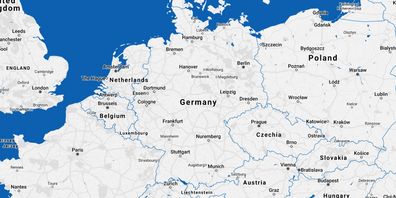
Map material from the free geographic information system OpenStreetMap. The DAAD explicitly does not adopt the information provided there (names, boundaries, etc.) in every case. No guarantee is given for the accuracy of this information.
Legend:
- Department
Basic information
- Teaching staff at the department
49
- Percentage of teaching by practitioners
no data
- Percentage of teaching by practitioners, master's
no data
Teaching in core subjects
- Basics (e.g., maths): 30.6%
- Construction Engineering: 44.9%
- Water Management: 0%
- Ressource Management: 0%
- Transport Systems, Urban and Regional planning: 0%
- Construction Management: 24.5%
- Other fields: 0%
Support during the study entry phase
- Total score for support in the study entry phase
7/14 points
Job market- and career-orientation
- Bachelor theses in cooperation with work environment
no data
- Master theses in cooperation with work environment
no data
- Share of professors with work experience
100.0%
- Professors with own engineering company
100.0%
Research
- Third party funds per academic
29,900 €
- Doctorates per professor
0.4
Further information provided by the department
Special features regarding teaching
Architects and civil engineers train together at the faculty under the Dortmund model for the building industry. The model is unique in Germany and represents a teaching concept that, in addition to the fundamental training in the chosen discipline, aims to give students interdisciplinary collaboration in a team with other engineers involved in construction. Projects involving joint work in a team of Architecture and Civil Engineering students take on a key role for the learning about this collaboration.
Special features regarding the international orientation
The faculty has numerous cooperation partners in other European and non-European countries. The cooperation faculties are open to students for a period of study abroad, as well as to teaching staff for lecturer mobility. Currently there are ongoing research projects with partners in countries including France, Algeria, Austria and the USA.
Special features regarding the equipment
The faculty's Institute of Building Research supports the experimental teaching and research as well as interdisciplinary cooperation between the institute's subject areas of Engineering Foundation/Foundation Engineering, Building Physics, Concrete Structures, Steel Construction, Structural Design and Construction Materials. The facilities available include: concrete and mortar lab with concreting system, sampling and processing tools, hydraulic and mechanical test machines, tensioning facility with flexible test frames, climate chambers and construction materials lab with photometer, scanning electron microscope, thermoanalysis, etc.
Special features regarding research activities
A key research area of the department is permanent structures. The aim is in-depth analysis and clarification of the issue of how buildings and civil engineering structures need to be designed and constructed to give them a life span that is appropriate for their purpose and resource usage. In line with the principle of resource-efficient building, this area is concerned with effectively increasing the life span of architectural structures using new extended planning and design concepts while taking into account the requirements in the lifecycle.
Support for founders
TU Dortmund initiates, funds and honours company start-ups and transfer from science. It actively supports its students, graduates and staff in the development and implementation of business ideas, in the evaluation, registration and utilisation of inventions and patents as well as in the transfer of knowledge and technology. The many offers and measures are bundled in the Centre for Entrepreneurship & Transfer. The tu>startup founding initiative and the knowledge and technology transfer of the TU Dortmund have received multiple awards.
Further information on research activities
Website of the Student Council
online-application
Civil Engineering
Facts
- Total number of students at the department
810
- Number of master degree students (w/o teacher qualification)
160
Students' assessments on undergraduate, presence-learning-courses
- Teacher support
- Support in studies
- Courses offered
- Study organisation
- Exam organisation
no data
- Digital teaching elements
- Research orientation
- Offers for career orientation
- Rooms
- Library
- IT-infrastructure
- Overall study situation
- Return rate of the questionnaires
34
Legend
Groups
green
yellow
red
not specified
Acronyms
(S) = Students' judgements
(F) = Facts
(P) = Professors' judgements
CE = Civil Engineering
Units
Value in percent
Value in points
Euro
Thousand Euro
Last Update 2022: Data collected by the
CHE Center for Higher Education
