


Two students in library

CHE University Ranking

Architecture, Department

Fachbereich Architektur

FH Münster University of Applied Sciences

Fachbereich Architektur
Leonardo-Campus 5
D-48149 Münster
Telephone: +49 251 83-65001
https://en.fh-muenster.de
FH Münster
Department on the internet
Degree courses with details

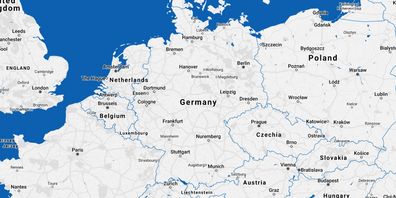
Map of Germany

Activate DAAD map

To activate the map, click on the "Show map" button. We would like to point out that data will be transmitted to OpenStreetMap after activation. You can find out more in our privacy policy. You can revoke your consent to the transmission of data at any time.

Map material from the free geographic information system OpenStreetMap. The DAAD explicitly does not adopt the information provided there (names, boundaries, etc.) in every case. No guarantee is given for the accuracy of this information.

Legend:

  • Department

Basic information

Total number of students at the department

1,270

Number of master degree students (w/o teacher qualification)

390

Support during the study entry phase

Total score for support in the study entry phase

13/14 points

Job market- and career-orientation

Professional qualification as an architect

no data

Students' assessments on undergraduate, presence-learning-courses

Design projects
Teacher support
Support in studies
Courses offered
Study organisation
Exam organisation
Digital teaching elements

Excursions
Introduction to scientific work
Offers for career orientation
Practical orientation in teaching
Support for stays abroad
Rooms
Library
IT-infrastructure
Student Workstations
Overall study situation
Return rate of the questionnaires

122

Further information provided by the department

Special features regarding teaching in the bachelor's degree programme

The Bachelor's degree course is an undergraduate course that leads to a first professionally qualifying academic degree after six semesters. It is broadly based, but focuses on fundamental expertise and methodological skills in the core areas of building and construction. At the beginning of the degree course, students are introduced to the basics of architecture through a deliberately streamlined curriculum. Teaching takes place in small groups, directly from the professorships and without the filter of non-professorial teaching staff. Direct contact is an important element of teaching at Münster School of Architecture (MSA).

Special features regarding teaching in the master's programmes

Students deepen their Master's studies in focus modules based on their interests and preferences. This offers them the opportunity to develop their own style and to find their own approach in discussions with their teachers. International university contacts encourage the inclusion of modules from the relevant universities in the degree course. "Stegreife" is an essential element in the first Master's semester. In three intensive short design exercises, students hone their design skills under the guidance of renowned architectural firms or universities.

Special features regarding the international orientation

Seminars in English are offered in the teaching of the basics from the first semester as well as in higher semesters. Other foreign languages are part of the compulsory elective programme. International professors and lecturers teach in core areas of architecture. There are valuable collaborations with a wide variety of international universities. The first BIP was offered in the summer of 2024 at a partner university in Madrid. In addition to the core component of the first semester in the Master's degree programme, the short design exercises, the department has been offering the Caribbean Winter School (CWS) at the CUJAE Havana since 2010.

Special features regarding the equipment

The combination of digital tools and the classic workshop was a necessary step in the field of modelling. In the workshop area of Münster School of Architecture (MSA), in addition to the usual woodworking options, there are 3D printers, as well as an industrial robot for plastic 3D printing for façade elements, etc. The digital laboratory has, among other things, a VR room, 3D printers in various sizes, 1 3D scanner, plus a cobot for small-scale extrusion techniques. 2 laser cutters and a digital hand-held milling machine complete the range of equipment. A thermal imaging camera and drone enable exciting views of buildings.

Special features regarding research and development

In today's architecture, advanced technologies play an increasingly important role. By using AI and other innovative programmes, architects develop sustainable solutions and optimise the efficiency of their designs. These technologies make it possible to analyse complex data and make informed decisions that take into account both aesthetic and environmental aspects. In these areas, ranging from 3D printing to smart office structures and circular construction, the department supervises research approaches and third-party funding.

Other special features

It was important to MSA to integrate recyclable materials and demountable structures into the teaching of architecture. Since then, the reuse of components has become the focus of teaching. The department also has a student Sustainability Officer, a recycling room with second-hand modelling materials and the facilities to recycle plastic for students' own 3D printing. Suggestions and constructive ideas from students are expressly welcome. Student participation remains a central concern, fair and open cooperation is a must

Information on access restrictions

Website of the Student Council

online-application

Legend

Groups

green

top group

yellow

middle group

red

bottom group
Not specified
not specified

Acronyms

(S) = Students' judgements

(F) = Facts

(P) = Professors' judgements

Units

Value in percent

Value in points

Euro

Thousand Euro

Last Update 2025: Data collected by the CHE Center for Higher Education