


Architecture, Department
Fakultät Architektur und Bauingenieurwesen
Technische Universität Dortmund
Fakultät Architektur und Bauingenieurwesen
August-Schmidt-Straße 8
D-44227 Dortmund
Telephone: +49 231 755 2074
https://www.tu-dortmund.de
TU Dortmund
Department on the internet
August-Schmidt-Straße 8
D-44227 Dortmund
Telephone: +49 231 755 2074
https://www.tu-dortmund.de
TU Dortmund
Department on the internet
Degree courses with details
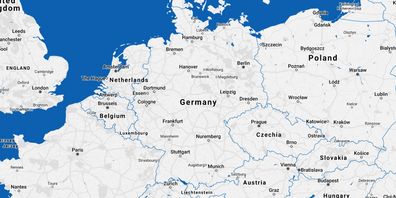
Map material from the free geographic information system OpenStreetMap. The DAAD explicitly does not adopt the information provided there (names, boundaries, etc.) in every case. No guarantee is given for the accuracy of this information.
Legend:
- Department
Basic information
- Total number of students at the department
1,030
- Number of master degree students (w/o teacher qualification)
230
Support during the study entry phase
- Total score for support in the study entry phase
7/13 points
Job market- and career-orientation
- Professional qualification as an architect
qualification according to UIA / UNESCO standard
Students' assessments on undergraduate, presence-learning-courses
- Teacher support
- Support in studies
- Courses offered
- Study organisation
- Exam organisation
- Digital teaching elements
- Scientific-artistical orientation
- Offers for career orientation
- Rooms
- Library
- IT-infrastructure
- Overall study situation
- Return rate of the questionnaires
92
Further information provided by the department
Special features regarding teaching
Architects and civil engineers train together at the faculty under the Dortmund model for the building industry. The model is unique in Germany and represents a teaching concept that, in addition to the fundamental training in the chosen discipline, aims to give students interdisciplinary collaboration in a team with other engineers involved in construction. Projects involving joint work in a team of Architecture and Civil Engineering students take on a key role for the learning about this collaboration.
Special features regarding the international orientation
There are two annual academies at the faculty – the Ruhr International Spring Academy and the Venice Summer Academy. In the two-week workshops for these, students work together with students from the partners from Venice, Turin, Eindhoven, Düsseldorf, etc. on various design tasks in mixed international teams and talk about their results in the final discussion groups with international visiting professors.
Special features regarding the equipment
The faculty has a workshop for model-making, a CIP pool, a departmental library, a media laboratory and an Institute of Building Research.
Special features regarding research activities
A key research area of the department is permanent structures. The aim is in-depth analysis and clarification of the issue of how buildings and civil engineering structures need to be designed and constructed to give them a life span that is appropriate for their purpose and resource usage. In line with the principle of resource-efficient building, this area is concerned with effectively increasing the life span of architectural structures using new extended planning and design concepts while taking into account the requirements in the lifecycle.
Support for founders
The department partners with the CET – Centre for Entrepreneurship & Transfer.
Further information on research activities
Website of the Student Council
online-application
Legend
Groups
green
yellow
red
not specified
Acronyms
(S) = Students' judgements
(F) = Facts
(P) = Professors' judgements
Units
Value in percent
Value in points
Euro
Thousand Euro
Last Update 2022: Data collected by the
CHE Center for Higher Education
