

Two students in library

CHE University Ranking

Business Psychology, Department

School of Business

Technische Hochschule Augsburg

School of Business
An der Hochschule 1
D-86161 Augsburg
https://www.tha.de
TH Augsburg
Department on the internet
Degree courses with details

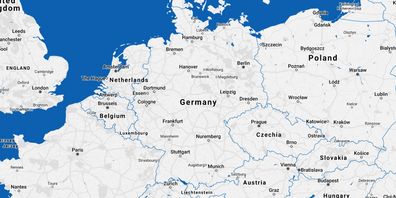
Map of Germany

Activate DAAD map

To activate the map, click on the "Show map" button. We would like to point out that data will be transmitted to OpenStreetMap after activation. You can find out more in our privacy policy. You can revoke your consent to the transmission of data at any time.

Map material from the free geographic information system OpenStreetMap. The DAAD explicitly does not adopt the information provided there (names, boundaries, etc.) in every case. No guarantee is given for the accuracy of this information.

Legend:

  • Department

Basic information

Total number of students at the department

310

Support during the study entry phase

Total score for support in the study entry phase

14/16 points

International orientation

Outgoing students

50.0%

Job market- and career-orientation

Percentage of teaching by practitioners

20.0%

Bachelor theses in cooperation with work environment

no data

Research

Cooperative doctoral degrees (in three years)

no data

Not specified
Third party funds per professor

8,726 €

Students' assessments on undergraduate, presence-learning-courses

Career and practical orientation
Learning and working spaces
Teacher support
Support in studies
Courses offered
Study organisation
Exam organisation
Digital learning
Introduction to scientific work
Rooms
Library
Overall study situation
Return rate of the questionnaires

93

Further information provided by the department

Special features regarding teaching in the bachelor's degree programme

The special characteristics include new teaching and learning formats, such as the "inverted classroom", simulations, educational games, professional application software, educational videos, interactive teaching (technically supported by response systems) and a learning management platform. Some subject-specific lectures are taught in English. Regular lectures by renowned international visiting professors are offered. Support for participation in competitions (e.g. University Trading Challenge, Audit Challenge) reflects the close link between students and teachers.

Special features regarding teaching in the master's programmes

The Master's degree programmes are characterised by research-oriented and practical learning. Modern teaching formats such as the "inverted classroom", simulations, case studies and interactive online elements promote analytical and independent work. Digital tools and learning platforms assist with instruction. English-language courses, international guest lecturers as well as practical and research projects with companies ensure a high degree of application orientation and international focus.

Special features regarding the international orientation

The department maintains a large network of partner universities around the world. In addition to the regular semester abroad, students also have the option of earning a dual degree with some of the partner universities. Intensive student exchange thanks to around 150 incoming and outgoing students each year. International Week offers a varied programme of lectures and presentations with guests from our partner universities and opportunities for personal contacts. Internationally oriented courses(including by international visiting professors) and business languages are central components of the course programmes.

Exchange universities for stay abroads

Dongguk University (Südkorea); ESIC Business & Marketing School (Spanien); Luleå Tekniska Universitet (Schweden); The Hague University of Applied Sciences (Niederlande); Lapland University of Applied Sciences (Finnland); Taylor's University (Malaysia); Budapest Business University (Ungarn); Oslo Metropolitan University (Norwegen, Partner von Elektortechnik); Shenzhen Technology University (China); UNIVERSITY OF GALWAY/OLLSCOIL NA GAILLIMH (Irland)

Special features regarding the equipment

All event rooms are equipped with two projectors (mostly laser projectors), network-connected computers and modern media technology. There are plenty of document cameras available. Laboratories: Logistics lab with special technical equipment, three computer labs with modern computer equipment, one with special equipment as Finance & Research; Business Psychology Laboratory; the equipment is supplemented by a media studio and a scale-up room for the implementation of innovative learning formats.

Special features regarding research activities

The areas of research focus lie in practice-oriented projects integrated into the curriculum and conducted together with students. The HSA_ops research group in the field of materials management & logistics, the Applied Psychology for Research and Innovation Lab (THA_april) in business psychology and the technology-transfer centres (TTZ) form central structures. Selected research focuses on sustainable logistics and supply-chain management as well as human-centred digitalisation

Other special features

Special features involve the anchoring of sustainability and diversity in teaching and projects. Students implement sustainability projects in a variety of degree courses; numerous transfer projects promote practical applications. A simulation game on the German sustainability strategy takes place in the block week of the BA programmes in Business Administration and International Management. Teachers receive further training in the field of Education for Sustainable Development (ESD). The successful WomanGoTop mentoring programme contributes to the advancement of women.

Further information on research activities

Information on access restrictions

Website of the Student Council

online-application

Legend

Groups

green

top group

yellow

middle group

red

bottom group
Not specified
not specified

Acronyms

(S) = Students' judgements

(F) = Facts

(P) = Professors' judgements

Units

Value in percent

Value in points

Euro

Thousand Euro

Last Update 2026: Data collected by the CHE Center for Higher Education