


CHE University Ranking
Filter for projects
Mechanical / Materials / Process Engineering, Department
Mathematisch-Naturwissenschaftlich-Technische Fakultät
Universität Augsburg
Mathematisch-Naturwissenschaftlich-Technische Fakultät
Institut für Physik
Universitätsstr. 1
D-86135 Augsburg
Telephone: +49 821 598 3332
https://www.uni-augsburg.de/de
Uni Augsburg
Department on the internet
Online application
Student body
Institut für Physik
Universitätsstr. 1
D-86135 Augsburg
Telephone: +49 821 598 3332
https://www.uni-augsburg.de/de
Uni Augsburg
Department on the internet
Online application
Student body
Degree courses with details
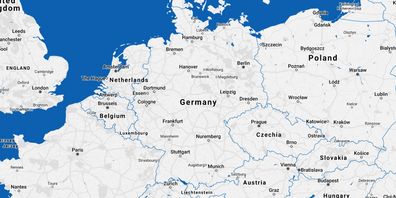
Map material from the free geographic information system OpenStreetMap. The DAAD explicitly does not adopt the information provided there (names, boundaries, etc.) in every case. No guarantee is given for the accuracy of this information.
Legend:
- Department
Basic information
- Percentage of teaching by practitioners
no data
- Percentage of teaching by practitioners, master's
no data
Support during the study entry phase
- Total score for support in the study entry phase
7/14 points
Job market- and career-orientation
- Bachelor theses in cooperation with work environment
no data
- Master theses in cooperation with work environment
no data
Research
- Third party funds per academic
80,700 €
- Doctorates per professor
0.4
Further information provided by the department
Special features regarding teaching
The two participating institutes have approx. 37 professorships from a very wide variety of fields of physics, chemistry, material sciences and materials engineering. This means that students can choose from a wide range of specialist lectures. In addition to basic research-oriented topics, students can also choose from many application-oriented final thesis topics. MRM: Markus Sause
Special features regarding the international orientation
Bachelor’s students can study one semester at a foreign university as part of the Erasmus programme. The master's degree is taught exclusively in English and attracts students from many different countries. The Institute of Physics is also host to a large number of foreign postdocs and visiting researchers. In the Master’s degree programme, students have the option of ‘Materials Science International’, in which students spend the first year of their degree programme abroad (Grenoble).
Special features regarding the equipment
The IfP is located in two research structures and a lecture-hall building. In 2020, MRM moved into a new building with integrated seminar rooms and lecture hall. IfP is optimally equipped with numerous large-scale instruments for spectroscopy, material synthesis and analytics in the fields of synthesis, characterisation and the development of new materials. Research at MRM includes work in the fields of materials chemistry and the development of polymeric and ceramic composites as well as hybrid composites and also addresses questions relating to production and manufacturing engineering.
Special features regarding research activities
The research focus in the Institute of Physics (IfP) is in the field of condensed matter. In addition to the Center for Electronic Correlation and Magnetism, other focal points are nanotechnology, materials research and chemical physics. The research focus of the Institute for Materials Resource Management (MRM) is to develop new circular structural materials right up to application maturity – from the perspective of sustainability and efficient use of resources.
Support for founders
On the one hand, there is the startHub – Innovation and Start-up Centre exists at the University of Augsburg, providing free personal guidance to students, employees and alumni of all departments in all questions relating to company start-ups.
Other special features
The transfer point of the institute, the Anwenderzentrum Material- und Umweltforschung (Application Centre for Material and Environmental Research), maintains close contacts with industry. The connections help graduates start their careers in companies in the region. Through two workgroups, the institute is connected to the MPI for Plasma Physics as well as the German Aerospace Center in Oberpfaffenhofen. Close cooperation exists with the Fraunhofer project group for Functional Lightweight Construction, the DLR Centre for Lightweight Production Technology and the DLR Institute for the Testing and Simulation of Gas Turbines.
Further information on research activities
Materials Science / Engineering
Facts
- Total number of students at the department
270
- Number of master degree students (w/o teacher qualification)
110
Students' assessments on undergraduate, presence-learning-courses
- Teacher support
no data
- Support in studies
no data
- Courses offered
no data
- Study organisation
- Exam organisation
no data
- Digital teaching elements
no data
- Research orientation
no data
- Offers for career orientation
no data
- Rooms
no data
- Library
no data
- IT-infrastructure
no data
- Laboratories
no data
- Overall study situation
no data
- Return rate of the questionnaires
15
Students' assessments on consecutive master's degree courses
- Teacher support
- Support in studies
- Digital teaching elements
- Courses offered
- Study organisation
- Transition to Master's studies
- Research orientation
- Overall study situation
- Return rate of the questionnaires
16
Legend
Groups
green
yellow
blue
not specified
Acronyms
(S) = Students' judgements
(F) = Facts
(P) = Professors' judgements
MatSE = Materials Science / Engineering
Units
Value in percent
Value in points
Euro
Thousand Euro
Last Update 2022: Data collected by the
CHE Center for Higher Education
