


Applied Natural Sciences, Department
Fachbereich Energietechnik
FH Aachen
Fachbereich Energietechnik
Heinrich-Mußmann-Straße 1
D-52428 Jülich
https://www.fh-aachen.de/hochschule/campus-juelich
FH Aachen/Jülich
Department on the internet
Heinrich-Mußmann-Straße 1
D-52428 Jülich
https://www.fh-aachen.de/hochschule/campus-juelich
FH Aachen/Jülich
Department on the internet
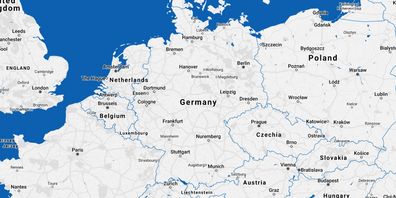
Map material from the free geographic information system OpenStreetMap. The DAAD explicitly does not adopt the information provided there (names, boundaries, etc.) in every case. No guarantee is given for the accuracy of this information.
Legend:
- Department
Basic information
- Percentage of teaching by practitioners
no data
Support during the study entry phase
- Total score for support in the study entry phase
9/14 points
Job market- and career-orientation
- Bachelor theses in cooperation with work environment
no data
Research
- Cooperative doctoral degrees (in three years)
no data
- Third party funds per professor
7,300 €
Further information provided by the department
Special features regarding teaching
The degree courses are located in the department of Energy Engineering. Students have the opportunity to pursue interdisciplinary learning. The recipe for success of the engineering training is based on a combination of the latest findings in the field of applied research with modern learning and teaching methods. Under the scope of various projects, there are partnerships with the Jülich Research Centre and regional industry. The professionally qualifying Bachelor's degree makes it possible for students to enter the labour market or the department's Master's programmes.
Special features regarding the international orientation
To enhance the department's reputation and improve students' perceptions from the outside, the positioning of the courses offered and the research results in the international environment play an important role. Current internationalisation measures are included in the curriculum: The semester abroad, the writing of a final dissertation and the bilingual master's degrees, "Energy Systems" and "Energy Management and Computer Science", the internationally oriented degrees (AOS, use of e-learning platforms).
Special features regarding the equipment
The department has modern laboratory equipment. During the degree course, modern components and systems are introduced and used in the many practicals. This reinforces the knowledge gained in lectures and exercises. The orientation and equipment for individual practicals is always adapted to keep abreast of new developments. The facilities on the Jülich campus, which was occupied in 2010, are state-of-the-art.
Special features regarding research and development
Students benefit from the close cooperation of the campus with the Jülich Research Centre, the Jülich solar institute and the affiliated institute NOWUM Energy. The teachers of the degree courses in Electrical and Electronic Engineering are involved in many research projects. They are conducted both within the institute and externally in conjunction with companies from the private sector. Students are integrated into research projects as student assistants.
Other special features
The Jülich campus of Aachen University of Applied Sciences offers students the possibility of intensive exchange with fellow students, professors and staff. The campus also offers housing for students. The international orientation of the degree courses plays a role in increasing the attractiveness of the Jülich campus where students live, learn and research in an international environment.
online-application
Physical Technology
Facts
- Total number of students at the department
160
Legend
Groups
green
yellow
red
not specified
Acronyms
(S) = Students' judgements
(F) = Facts
(P) = Professors' judgements
PT = Physical Technology
Units
Value in percent
Value in points
Euro
Thousand Euro
Last Update 2022: Data collected by the
CHE Center for Higher Education
