


Business Computing, Department
Fachbereich Elektrotechnik und Informationstechnik
FH Aachen
Fachbereich Elektrotechnik und Informationstechnik
Eupener Straße 70
D-52066 Aachen
Telephone: +49 241 6009-52161
https://www.fh-aachen.de
FH Aachen
Department on the internet
Eupener Straße 70
D-52066 Aachen
Telephone: +49 241 6009-52161
https://www.fh-aachen.de
FH Aachen
Department on the internet
Degree courses with details
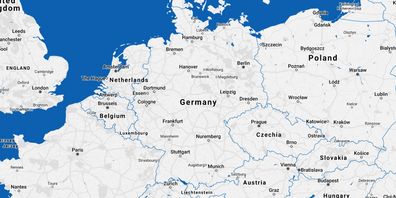
Map material from the free geographic information system OpenStreetMap. The DAAD explicitly does not adopt the information provided there (names, boundaries, etc.) in every case. No guarantee is given for the accuracy of this information.
Legend:
- Department
Basic information
- Total number of students at the department
250
- Percentage of teaching by practitioners
17.0%
Support during the study entry phase
- Total score for support in the study entry phase
12/16 points
Job market- and career-orientation
- Bachelor theses in cooperation with work environment
7.8%
Research
- Cooperative doctoral degrees (in three years)
1
- Third party funds per professor
57,700 €
Students' assessments on undergraduate, presence-learning-courses
- Teacher support
- Support in studies
- Courses offered
- Study organisation
- Exam organisation
- Digital teaching elements
- Introduction to scientific work
- Offers for career orientation
- Support during practical semester
- Practical orientation in teaching
- Support for stays abroad
- Rooms
- Library
- IT-infrastructure
- Labs and Spaces
- Overall study situation
- Return rate of the questionnaires
45
Further information provided by the department
Special features regarding teaching
Building knowledge, ability to apply soft skills practically (team and communication skills, presentations, language skills) for professional activities in Business Informatics; Distinct practice orientation through teachers who have a lot of practical experience and good contacts with industry; Up-to-date teaching through research projects with universities and industry partners; Students/teachers can spend a semester abroad thanks to partnerships with over 100 partner universities worldwide; Close contact with Business Informatics associations.
Special features regarding the international orientation
Its location in the border triangle DE-NL-BE makes the institution perfect for cross-border cooperation, such as with Katholieke Hogeschool Zuid-West-Vlaanderen, Haute École de la Province de Liège and Hogeschool Zuyd. Many students come from the Netherlands-Belgium border area or live there. Distinct international activities such as Euregio Summer School and international competitions such as Robocups + Hackathons; Participation in the Erasmus programme. Special degree course in Business Information Systems: Students benefit from partner universities in 2 faculties (Business and IT).
Exchange universities for stay abroads
Universidad de los Iles Balerares, Mallorca, Universidad de las Palmas, Gran Canaria, Barcelona East School of Engineering EEBE, Spanien; University of the Sunshine Coast/Sippy Downs, RMIT University Melbourne, University of Technology Sydney, Australien; Southeast Missouri State University, National University San Diego California, USA; RMIT University Ho Chi Minh City, Vietnam; Tomsk Polytechnic University, Russland; Universiti Putra Malaysia (UPM )/Kuala Lumpur, Malaysia; National Taiwan University/Taipeh, Taiwan; Université Montpellier 2, Université Paul Sabatier Toulouse, Université Savoie Mont-Blanc, Université de Lille, Frankreich; Universidad Técnica Federico Santa María, Chile; Mid Sweden University/Östersund, Mälardalen University, Västeras, Schweden.
Special features regarding the equipment
Students have access to the latest generation of technical resources. These include: Test networks (with PCs, routers, switches, firewalls) to test the operation and optimisation of networks; Forensic workstations; Lab for IT organisation & management brings the theory of IT service management to life; Mobile media & communication lab for the acquisition of skills in usability, design and computer science; Big data computing cluster - audio visual production studio; LEAN lab, 3D body scanner; GPU-based 3D visualisation of nerve fibre tracts of the human brain; Native tools.
Special features regarding research activities
Various research institutes and projects, including: - IT Security Awareness/Gamification and Smart Home/Smart Living – Business Models in the Metaverse - GHOST project prepares companies for cyber-attacks, project SMILE IT Security for Smart Living Environments; Applications of VR and AR; Innovation potential through digitalisation; Development of solutions in the field of (electro)mobility – software testing and test automation - IT forensics, further projects in the Institute for Digitalisation Aachen (IDA) and close cooperation with Digital Hub Aachen
Support for founders
Elective module Entrepreneurship integrated into the degree course; In addition: AC.E - Initiative for start-up interested students, EXIST start-up grant, start-up advice, start-up region AC^2, student start-up programme TRACE - Transforming academic into entrepreneurial minds, ring event entrepreneur seminar: Experienced entrepreneurs answer individual questions from student business founders - Transfer Office & Career Service; PatentScout: In confidential discussions with a patent officer, students plan the optimal procedure for the implementation of their project.
Other special features
Active participation of the faculties in the newly created Diversity Board; Implementation of the diversity management system to dovetail with existing steering instruments in the organisational structures of Aachen University of Applied Sciences; Anchoring sustainable topics in modules in the curricula, e.g. "Clean University"; Points of contact created, such as a female and a male person of trust; Mental Health First Aid training for employees and tutors, rainbow flag concept
Website of the Student Council
online-application
Legend
Groups
green
yellow
red
not specified
Acronyms
(S) = Students' judgements
(F) = Facts
(P) = Professors' judgements
Units
Value in percent
Value in points
Euro
Thousand Euro
Last Update 2023: Data collected by the
CHE Center for Higher Education
