

CHE University Ranking
Filter for projects
Applied Natural Sciences, Department
Fakultät Life Sciences
Hochschule für Angewandte Wissenschaften Hamburg
Fakultät Life Sciences
Department Umwelttechnik
Ulmenliet 20
D-21033 Hamburg
Telephone: +49 40 42875-6400
https://www.haw-hamburg.de
HAW Hamburg
Department on the internet
Online application
Student body
Department Umwelttechnik
Ulmenliet 20
D-21033 Hamburg
Telephone: +49 40 42875-6400
https://www.haw-hamburg.de
HAW Hamburg
Department on the internet
Online application
Student body
Degree courses with details
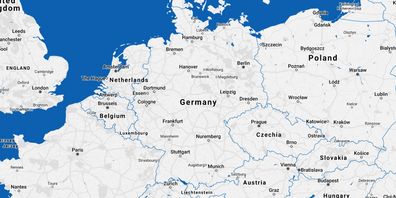
Map material from the free geographic information system OpenStreetMap. The DAAD explicitly does not adopt the information provided there (names, boundaries, etc.) in every case. No guarantee is given for the accuracy of this information.
Legend:
- Department
Basic information
- Percentage of teaching by practitioners
30.0%
- Percentage of teaching by practitioners, master's
12.0%
Support during the study entry phase
- Total score for support in the study entry phase
11/14 points
Job market- and career-orientation
- Bachelor theses in cooperation with work environment
88.1%
- Master theses in cooperation with work environment
84.9%
Research
- Cooperative doctoral degrees (in three years)
2
- Third party funds per professor
75,600 €
Further information provided by the department
Special features regarding teaching
High quality teaching at the HAW Hamburg is very important. The university therefore offers individual as well as team coaching for newly appointed professors and lecturers. Teachers can also rely on extensive opportunities for continuing education (e.g. on topics such as skill orientation and problem-based learning). Teaching is characterised by high practical relevance. Lectures on Natural Science and technical topics are generally accompanied by practicals in laboratories.
Special features regarding the international orientation
The internationalisation is a special priority for the faculty. It has an International Office that supports students looking to spend time abroad. Visiting students are supervised in what is referred to as a ‘buddy programme’. Bachelor's students can complete their practical semester abroad. International exchange is facilitated through numerous foreign partner universities and membership in international networks (e.g. CARPE). Support is also provided for assistant professor exchanges. There is a wide range of English-language courses in the summer semester.
Special features regarding the equipment
The university has modern, well-equipped laboratories where practicals can be carried out to support lectures. With the EnergyCampus, the department has its own modern research centre with state-of-the-art equipment.
Special features regarding research and development
Research projects are interdisciplinary, encompassing degree courses, are nationwide and international in the key areas of renewable energy sources as well as environmental risk assessment and technical environmental protection. The department participates on the Energy Campus (www.cc4e.de) with its own wind turbines and research projects, including protecting bats from wind turbines, and has its own solar power systems. Solutions for the sustainability of pharmaceuticals are developed in the interdisciplinary PharmCycle project. International research is conducted in environmental analysis in the North and Baltic Sea using innovative methods.
Other special features
In the stage I studies, close collaboration with the Biotechnology, Medical Technology and Process Engineering departments within the faculty of Life Sciences. Possibility of interdisciplinary research with these departments and partner universities in various research and transfer centres and on research focuses of the faculty of Life Sciences.
Further information on research activities
Energy Systems Engineering
Facts
- Total number of students at the department
70
- Number of master degree students (w/o teacher qualification)
70
Environmental Engineering
Facts
- Total number of students at the department
340
- Number of master degree students (w/o teacher qualification)
no data
Legend
Groups
green
yellow
blue
not specified
Acronyms
(S) = Students' judgements
(F) = Facts
(P) = Professors' judgements
Energy = Energy Systems Engineering
EnvE = Environmental Engineering
Units
Value in percent
Value in points
Euro
Thousand Euro
Last Update 2022: Data collected by the
CHE Center for Higher Education
