
Two students in library

CHE University Ranking

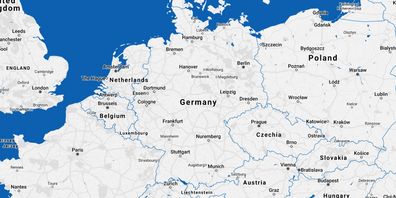
Map of Germany

Activate DAAD map

To activate the map, click on the "Show map" button. We would like to point out that data will be transmitted to OpenStreetMap after activation. You can find out more in our privacy policy. You can revoke your consent to the transmission of data at any time.

Map material from the free geographic information system OpenStreetMap. The DAAD explicitly does not adopt the information provided there (names, boundaries, etc.) in every case. No guarantee is given for the accuracy of this information.

Legend:

  • Department

Basic information

Teaching staff at the department

no data

Support during the study entry phase

Total score for support in the study entry phase

12/16 points

International orientation

Outgoing students

1.0%

Job market- and career-orientation

Percentage of teaching by practitioners

20.0%

Percentage of teaching by practitioners, master's

20.0%

Bachelor theses in cooperation with work environment

no data

Master theses in cooperation with work environment

no data

Research

Third party funds per academic

198,100 €

Doctorates per professor

1

Further information provided by the department

Special features regarding teaching in the bachelor's degree programme

Solid, practice-related basic training in Higher Mathematics, Technical Mathematics, Building Physics, Materials Science; Balanced mix of subjects in Structural Engineering and Infrastructure Planning; A wide range of offers for intensive student advice and counselling, including personal support for students; Direct contact between students and professors.

Special features regarding teaching in the master's programmes

Several Master's degree programmes to choose from: Civil Engineering – Structural Engineering (KIB): Focus on the design, calculation and construction of structures. The degree course is mainly about structures and structural design and engineering in civil and structural engineering. Civil Engineering – Infrastructure, Water and Mobility (BIWaM): Focuses on the field of infrastructure planning and design with a particular focus on water management, traffic systems and mobility concepts. Real Estate and Facilities Management (IFMT): Combines engineering, business and technical aspects of real estate and facility management. Environmental Engineering (UIW): Strong focus on environmental engineering and the sustainable use of natural resources

Special features regarding the equipment

The tomography portal "Gulliver" uses X-ray technology to provide a better understanding of the load-bearing and deformation behaviour of components with progressive damage. For the first time, it enables investigations of components with real dimensions under increasing loads and high resolution. Funded by a large-scale equipment initiative of the German Research Foundation (DFG), the tomography portal is a central component of the Civil Engineering Equipment Centre (BIG) at the Rhineland-Palatinate Technical University (RPTU) in Kaiserslautern.

Special features regarding research activities

Research focuses: Structural civil engineering, infrastructure, water management, mobility, sustainability. Unique large-scale CT scanner enables non-destructive analysis of building materials and structures in very high resolution. third-party funded projects: Participation in national and international research projects. Interdisciplinary character: Cooperation with departments such as Architecture, Mechanical Engineering and Environmental Sciences. Non-university research: Cooperation with Fraunhofer Institute for Experimental Software Engineering (IESE), German Research Centre for Artificial Intelligence (DFKI).

Further information on research activities

Website of the Student Council

online-application

Civil Engineering

Facts

Total number of students at the department

450

Number of master degree students (w/o teacher qualification)

260

Teaching in core subjects

  • Basics: 44.2%
  • Constructive engineering: 26.2%
  • Water Management: 15.1%
  • Ressource Management: 1%
  • Transport Systems, Urban and Regional planning: 8.8%
  • Construction Management: 4.7%

Students' assessments on undergraduate, presence-learning-courses

Learning and working spaces
Teacher support
Support in studies
Courses offered
Study organisation
Exam organisation
Digital teaching elements
Excursions
Introduction to scientific work
Offers for career orientation
Practical orientation in teaching

no data

Support for stays abroad

no data

Rooms
Library
IT-infrastructure
Laboratories
Overall study situation
Return rate of the questionnaires

32

Students' assessments on consecutive master's degree courses

Teacher support
Support in studies
Digital teaching elements
Practical orientation in teaching
Courses offered
Study organisation
Transition to Master's studies
Research orientation
Support for stays abroad

no data

Not specified
Overall study situation
Return rate of the questionnaires

33

Environmental Civil Engineering

Facts

Total number of students at the department

20

Number of master degree students (w/o teacher qualification)

20

Students' assessments on consecutive master's degree courses

Teacher support

no data

Not specified
Support in studies

no data

Not specified
Digital teaching elements

no data

Not specified
Practical orientation in teaching

no data

Not specified
Courses offered

no data

Not specified
Study organisation

no data

Not specified
Transition to Master's studies

no data

Not specified
Research orientation

no data

Not specified
Support for stays abroad

no data

Not specified
Overall study situation

no data

Not specified
Return rate of the questionnaires

6

Legend

Groups

green

top group

yellow

middle group

red

bottom group
Not specified
not specified

Acronyms

(S) = Students' judgements

(F) = Facts

(P) = Professors' judgements

CE = Civil Engineering

EnvCE = Environmental Civil Engineering

Units

Value in percent

Value in points

Euro

Thousand Euro

Last Update 2025: Data collected by the CHE Center for Higher Education