
Two students in library

CHE University Ranking

Applied Natural Sciences, Department

Fachbereich Physikingenieurwesen

FH Münster University of Applied Sciences

Fachbereich Physikingenieurwesen
Stegerwaldstraße 39
D-48565 Steinfurt
Telephone: +49 2551 962-166
https://en.fh-muenster.de
FH Münster/Steinfurt
Department on the internet
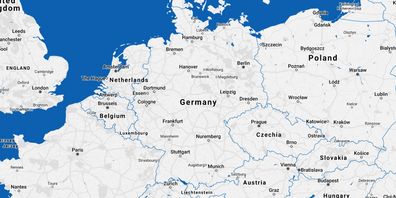
Map of Germany

Activate DAAD map

To activate the map, click on the "Show map" button. We would like to point out that data will be transmitted to OpenStreetMap after activation. You can find out more in our privacy policy. You can revoke your consent to the transmission of data at any time.

Map material from the free geographic information system OpenStreetMap. The DAAD explicitly does not adopt the information provided there (names, boundaries, etc.) in every case. No guarantee is given for the accuracy of this information.

Legend:

  • Department

Support during the study entry phase

Total score for support in the study entry phase

15/16 points

International orientation

Outgoing students

no data

Job market- and career-orientation

Percentage of teaching by practitioners

5.8%

Percentage of teaching by practitioners, master's

no data

Bachelor theses in cooperation with work environment

57.0%

Master theses in cooperation with work environment

38.3%

Research

Cooperative doctoral degrees (in three years)

2

Third party funds per professor

156,800 €

Further information provided by the department

Special features regarding teaching in the bachelor's degree programme

Our Bachelor's degree programmes combine teaching in small, personally supervised groups with practical quality requirements. You will receive a broad basic scientific and technical training with an in-depth study programme. Current links to business are ensured by the use of external assistant professors and externally funded projects. The academic success of students is increased through intensive exercises, work placements, tutorials and homework including monitoring. There is high practical relevance in the form of laboratory practicals and in the practical phase.

Special features regarding teaching in the master's programmes

Our Master's programmes combine teaching in small, personally supervised groups with strong industrial practice in very well-equipped laboratories. You study on an interdisciplinary basis and can also choose modules from other departments at the Technology campus. You can study internationally in English at our university or at universities abroad. Participation in third-party funded projects enables the financing of studies. Our Master's thesis positions in industry offer a springboard into sought-after jobs, or you can go into research, e.g. via our doctoral programmes.

Special features regarding the international orientation

The Department of Physical Engineering has international cooperation partners in Australia, Brazil, France, Italy, the Netherlands, Poland, Sweden, Switzerland, the Czech Republic and the USA. The contacts are used by students for study abroad during the practical phase and for the degree thesis. In addition, there is a cooperation agreement with the UNSW Canberra for cooperative doctorates.

Special features regarding the equipment

Due to the high level of third-party funding, the department has ultra-modern laboratory equipment which is also available to students in teaching. The laboratory equipment is continually expanded and improved through other quality improvement funding. Students can carry out their own projects in the makerspace of the Steinfurt Technology Campus, accompanied by a research assistant.

Special features regarding research and development

The Department of Physical Engineering is one of the strongest research departments at Münster University of Applied Sciences. Our laboratories focus on research in the fields of medical technology and ergonomics, biomechanics, biomechatronics with a focus on rehabilitation technology, the development of novel agents for medical applications, quantum optics and classical optics with a focus on the development of new solid-state lasers and adaptive optics, laser material processing, quantum technology, electron microscopy and sealing technology.

Other special features

Graduates of the Department of Physics Engineering are in great demand on the job market. Professional prospects open up for our graduates in the field of innovative technologies in industry, in hospitals, in research, in sales and management.

Further information on research activities

Website of the Student Council

online-application

Interdisciplinary Applied Natural Sciences

Facts

Total number of students at the department

80

Number of master degree students (w/o teacher qualification)

80

Medical technology

Facts

Total number of students at the department

260

Number of master degree students (w/o teacher qualification)

70

Physical Technology

Facts

Total number of students at the department

60

Number of master degree students (w/o teacher qualification)

20

Legend

Groups

green

top group

yellow

middle group

red

bottom group
Not specified
not specified

Acronyms

(S) = Students' judgements

(F) = Facts

(P) = Professors' judgements

IntNatSci = Interdisciplinary Applied Natural Sciences

MT = Medical technology

PT = Physical Technology

Units

Value in percent

Value in points

Euro

Thousand Euro

Last Update 2025: Data collected by the CHE Center for Higher Education