
CHE University Ranking
Filter for projects
Applied Natural Sciences, Department
Fakultät Angewandte Naturwissenschaften
Hochschule für angewandte Wissenschaften Coburg
Fakultät Angewandte Naturwissenschaften
Friedrich-Streib-Straße 2
D-96450 Coburg
Telephone: +49 9561 317-397
https://www.hs-coburg.de
HAW Coburg
Department on the internet
Student body
Friedrich-Streib-Straße 2
D-96450 Coburg
Telephone: +49 9561 317-397
https://www.hs-coburg.de
HAW Coburg
Department on the internet
Student body
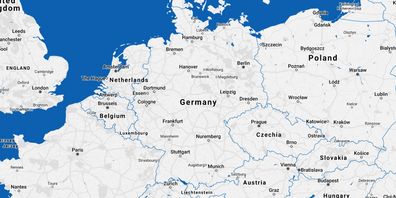
Map material from the free geographic information system OpenStreetMap. The DAAD explicitly does not adopt the information provided there (names, boundaries, etc.) in every case. No guarantee is given for the accuracy of this information.
Legend:
- Department
Basic information
- Percentage of teaching by practitioners
5.0%
- Percentage of teaching by practitioners, master's
5.0%
Support during the study entry phase
- Total score for support in the study entry phase
12/14 points
Job market- and career-orientation
- Bachelor theses in cooperation with work environment
70.7%
- Master theses in cooperation with work environment
71.2%
Research
- Cooperative doctoral degrees (in three years)
6
- Third party funds per professor
101,200 €
Further information provided by the department
Special features regarding teaching
In addition to the subject-specific knowledge and skills the faculty also attaches great importance to general skills: Students learn methodical working methods, attend seminars on personality development and work on project topics (including interdisciplinary ones). The focus here is also on the direct link to professional practice. First-semester tutorials provide orientation in the initial phase of the degree course; subject-specific tutorials provide support for exam preparation. The faculty also participates actively in two projects from the "Quality Pact in Teaching" of the BMBF to continually develop teaching.
Special features regarding the international orientation
The international branch of study "Engineering Physics" in the degree course in Technical Physics with an integrated year of study abroad at a partner university (current partner USST Shanghai/ China, Winnipeg/ Canada and Twente/ Netherlands: Split/ Croatia) aims to meet the demand for internationally oriented physics engineers. 70 % of the course is taught in English. Students have contact with international companies and students during the degree course.
Special features regarding the equipment
The research institutes of the faculty as well as the laboratories more closely associated with teaching are kept up to date and thus offer the best prerequisites for top-class applied research and innovative, practice-oriented knowledge transfer.
Special features regarding research and development
Three research institutes are accommodated in the faculty: Institute for Sensor and Actuator Technology (ISAT), Department of Analytical Chemistry & Fuel Research at the Automotive Technology Transfer Centre of the Coburg University of Applied Sciences (TAC) and Institute for Bioanalytics. The Hochschule Coburg is represented on the research map of the German Rectors' Conference (HRK) with three focal areas, of which two are in the faculty. The intense research activities result in a high number of cooperative doctorates for a higher education institution.
Other special features
The faculty attaches great value to good contact between lecturers and students and encourages this through activities inside and outside of the curriculum such as informational events at the start of the semester, even in the higher semesters, informal gatherings in the degree course and a general "policy of short distances and open doors".
Further information on research activities
Biotechnology
Facts
- Total number of students at the department
240
- Number of master degree students (w/o teacher qualification)
30
Students' assessments on undergraduate, presence-learning-courses
- Teacher support
- Support in studies
- Courses offered
- Study organisation
- Exam organisation
- Digital teaching elements
- Laboratory internships
no data
- Offers for career orientation
- Support during practical semester
no data
- Rooms
- Library
- IT-infrastructure
- Overall study situation
- Return rate of the questionnaires
19
Interdisciplinary Applied Natural Sciences
Facts
- Total number of students at the department
60
- Number of master degree students (w/o teacher qualification)
60
Physical Technology
Facts
- Total number of students at the department
150
- Number of master degree students (w/o teacher qualification)
20
Legend
Groups
green
yellow
blue
not specified
Acronyms
(S) = Students' judgements
(F) = Facts
(P) = Professors' judgements
BT = Biotechnology
IntNatSci = Interdisciplinary Applied Natural Sciences
PT = Physical Technology
Units
Value in percent
Value in points
Euro
Thousand Euro
Last Update 2022: Data collected by the
CHE Center for Higher Education
