


CHE University Ranking
Filter for projects
Mechatronics, Department
Fakultät für Maschinenbau und Mechatronik
Hochschule Karlsruhe - Technik und Wirtschaft
Fakultät für Maschinenbau und Mechatronik
Studiengang Mechatronik
Moltkestraße 30
D-76133 Karlsruhe
Telephone: +49 721 925-1705
https://www.h-ka.de
HS Karlsruhe
Department on the internet
Online application
Studiengang Mechatronik
Moltkestraße 30
D-76133 Karlsruhe
Telephone: +49 721 925-1705
https://www.h-ka.de
HS Karlsruhe
Department on the internet
Online application
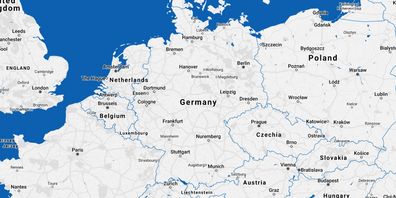
Map material from the free geographic information system OpenStreetMap. The DAAD explicitly does not adopt the information provided there (names, boundaries, etc.) in every case. No guarantee is given for the accuracy of this information.
Legend:
- Department
Basic information
- Total number of students at the department
340
- Number of master degree students (w/o teacher qualification)
60
- Percentage of teaching by practitioners
7.0%
- Percentage of teaching by practitioners, master's
7.5%
Cooperative Education
- Students in cooperative education
30
Support during the study entry phase
- Total score for support in the study entry phase
13/14 points
Job market- and career-orientation
- Bachelor theses in cooperation with work environment
67.2%
- Master theses in cooperation with work environment
79.1%
Research
- Cooperative doctoral degrees (in three years)
7
- Third party funds per professor
6,800 €
Students' assessments on undergraduate, presence-learning-courses
- Teacher support
- Support in studies
- Courses offered
- Study organisation
- Exam organisation
- Digital teaching elements
- Laboratory internships
- Offers for career orientation
- Support during practical semester
- Rooms
- Library
- IT-infrastructure
- Overall study situation
- Return rate of the questionnaires
45
Further information provided by the department
Special features regarding teaching
Tutorials for students from higher semesters, support for learning groups, regular agreements with the departmental student organisation, StudiumPlus – combining academic studies and training, international focus – many partnerships with universities throughout the world, specialisation/subject-area selection during stage II studies, practically oriented training, Learning Centre for Mathematics and Electrical Engineering, gap courses, ‘Successful start’ programme, ‘Learning how to learn’ seminars, high level of practical relevance, participation in outstanding projects (sensory science with Karlsruhe Zoo, snow quality sensor with Paralympics Team, gripping sensor)
Special features regarding the international orientation
Approximately 25 % of Bachelor's students have contact abroad (specialised and/or practical study semester, final thesis); More than 60 partner universities around the world, in addition to the leading market of the USA also in the growth region of South-East Asia; Mobility programmes with financial support.
high-quality double degree programmes with France (ENSMM Besancon) and the USA (Cal Poly State University); Erasmus Mundus programme: EU4M Master's programme. International research cooperation with UMP Malaysia (including doctoral students). Numerous international third-party funds have been obtained for projects in which students are involved.
Special features regarding the equipment
To ensure outstanding teaching and research, numerous laboratories and facilities with modern equipment are available, such as: Laboratory for Manufacturing Engineering and Production department, Institute of Refrigeration, Air-Conditioning and Environmental Technology (IKKU), Bionics Laboratory, Robotics Laboratory, Institute for Energy-Efficient Mobility, Plastics Engineering Laboratory, Microcomputer Engineering Laboratory, Quality Management Laboratory, Sensor Technology and Actuator Engineering Laboratory, Materials Testing Laboratory, Cleanroom, Acoustics Laboratory, Institute for Mechatronic Systems, Digital Electronics Laboratory, various 3D printers, and much more
Special features regarding research and development
The laboratories are used for teaching and research (e.g. refrigeration laboratory, wind tunnel), laboratory equipment is competitive and modern; Active student involvement in research projects, especially in the Master’s degree course (Sensorei with Karlsruhe Zoo, snow-quality sensor with Paralympics Team, grasping sensor), increasing proportion of internal theses; Professors included in the BW CAR quality instrument (experimental clause), focus is applied research in cooperation with small and medium-sized companies, currently
Support for founders
The Center of Competence at the HsKA is the contact point for people interested in founding a company at the Karlsruhe University of Applied Sciences. Students and scientific staff are prepared for self-employment and young entrepreneurs are supported in all start-up phases. There are seminars and workshops for company founders and people interested in founding a company. A first consultation service is also available as well as the "Gründer-Treff" start-up group.
Further information on research activities
Legend
Groups
green
yellow
blue
not specified
Acronyms
(S) = Students' judgements
(F) = Facts
(P) = Professors' judgements
Units
Value in percent
Value in points
Euro
Thousand Euro
Last Update 2022: Data collected by the
CHE Center for Higher Education
