
Two students in library

CHE University Ranking

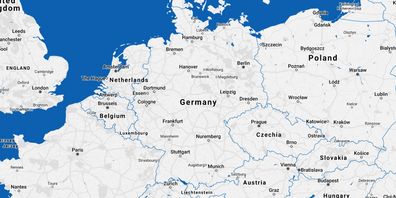
Map of Germany

Activate DAAD map

To activate the map, click on the "Show map" button. We would like to point out that data will be transmitted to OpenStreetMap after activation. You can find out more in our privacy policy. You can revoke your consent to the transmission of data at any time.

Map material from the free geographic information system OpenStreetMap. The DAAD explicitly does not adopt the information provided there (names, boundaries, etc.) in every case. No guarantee is given for the accuracy of this information.

Legend:

  • Department

Support during the study entry phase

Total score for support in the study entry phase

11/16 points

International orientation

Outgoing students

no data

Job market- and career-orientation

Percentage of teaching by practitioners

20.0%

Percentage of teaching by practitioners, master's

no data

Bachelor theses in cooperation with work environment

75.1%

Master theses in cooperation with work environment

75.2%

Research

Cooperative doctoral degrees (in three years)

3

Third party funds per professor

81,400 €

Further information provided by the department

Special features regarding teaching in the bachelor's degree programme

Department 1 offers a wide range of future-oriented, technological Bachelor's degree courses. The education is practice-oriented and takes place in spacious laboratories with modern equipment, where laboratory engineers and teaching staff ensure individual supervision and students can work on innovative technical solutions themselves. There is a close link between teaching and research as well as with regional and international industry. Students benefit from this, for example, by being involved in research projects or in work placements and theses.

Special features regarding teaching in the master's programmes

In its range of Master´s degree programmes too, Department 1 "Technology" features spacious and modern laboratories, practical test set-ups and individual supervision. The strong profile is rounded off by scientific exchange, for example during the Makeathon in the field of automation and control technology, the direct involvement in research projects, the opportunity to prepare Master's theses in industry and the subsequent possible transition to doctoral studies as well as partnerships with international universities.

Special features regarding the international orientation

Internationally oriented programmes such as the "Blended Intensive Programme" (BIP) within the framework of Erasmus+ are used across departments at Bremerhaven University of Applied Sciences. Two BIPs have already been successfully carried out as a coordinating university. Here, short classroom phases at a partner university are combined with virtual components. The aim is to promote international cooperation and to strengthen intercultural skills. The joint seminars with Spain and Poland are also offered as "short-term mobility" programmes with a virtual phase via Erasmus.

Special features regarding the equipment

Department 1 "Technology" at Bremerhaven University of Applied Sciences is characterised by modern technical equipment tailored to the needs of the various fields of study and research. The specialised laboratories and facilities for the fields of electrical engineering, food technology, production engineering and marine engineering are particularly noteworthy. These include, for example, a complete ship engine system, a modern ship operating technology simulator, lightweight construction and industrial robots, welding machines, mass spectrometers and even a brewing laboratory.

Special features regarding research and development

In line with its maritime profile, the focus of research activities in Department 1 is in the field of energy and marine technology, also working in cooperation with regional, national and international partners from industry and science. The topics are diverse and range from wind energy to hydrogen to aquaponics. In the Life Sciences research cluster, close cooperation is maintained with the Alfred Wegener Institute (AWI), which means that research focuses on marine chemistry, marine microbiology, fisheries biology, algae biotechnology and aquaculture.

Other special features

Bremerhaven University of Applied Sciences and Department 1 are fully committed to sustainability and climate protection through a variety of measures. Degree programmes and innovative research projects focus on renewable energies, sustainable nutrition and environmental technologies. An integrated climate protection concept includes energy efficiency measures, CO₂ reduction and the introduction of LED lighting. The cafeteria is expanding its range of vegetarian and vegan dishes to improve its climate footprint. Bicycle-friendly infrastructure underlines the commitment to actively contribute to climate protection.

Further information on research activities

Information on access restrictions

Website of the Student Council

online-application

Biotechnology

Facts

Total number of students at the department

240

Number of master degree students (w/o teacher qualification)

60

Students' assessments on undergraduate, presence-learning-courses

Learning and working spaces
Teacher support
Support in studies
Courses offered
Study organisation
Exam organisation
Digital teaching elements
Laboratory internships
Introduction to scientific work
Offers for career orientation

no data

Support during practical semester

no data

Practical orientation in teaching
Support for stays abroad

no data

Rooms
Library
IT-infrastructure
Overall study situation
Return rate of the questionnaires

21

Energy Systems Engineering

Facts

Total number of students at the department

90

Number of master degree students (w/o teacher qualification)

20

Interdisciplinary Applied Natural Sciences

Facts

Total number of students at the department

200

Number of master degree students (w/o teacher qualification)

40

Students' assessments on undergraduate, presence-learning-courses

Learning and working spaces
Teacher support
Support in studies
Courses offered
Study organisation
Exam organisation
Digital teaching elements
Laboratory internships
Introduction to scientific work
Offers for career orientation

no data

Support during practical semester
Practical orientation in teaching
Support for stays abroad

no data

Rooms
Library

no data

IT-infrastructure
Overall study situation
Return rate of the questionnaires

19

Medical technology

Facts

Total number of students at the department

180

Number of master degree students (w/o teacher qualification)

no data

Legend

Groups

green

top group

yellow

middle group

red

bottom group
Not specified
not specified

Acronyms

(S) = Students' judgements

(F) = Facts

(P) = Professors' judgements

BT = Biotechnology

Energy = Energy Systems Engineering

IntNatSci = Interdisciplinary Applied Natural Sciences

MT = Medical technology

Units

Value in percent

Value in points

Euro

Thousand Euro

Last Update 2025: Data collected by the CHE Center for Higher Education