


Romance Studies, Department
Philosophische Fakultät und Fachbereich Theologie
Friedrich-Alexander-Universität Erlangen-Nürnberg
Philosophische Fakultät und Fachbereich Theologie
Institut für Romanistik
Bismarckstraße 1
D-91054 Erlangen
Telephone: +49 9131 85-22428
https://www.fau.de
Uni Erl.-Nürnb./Erlangen
Department on the internet
Institut für Romanistik
Bismarckstraße 1
D-91054 Erlangen
Telephone: +49 9131 85-22428
https://www.fau.de
Uni Erl.-Nürnb./Erlangen
Department on the internet
Degree courses with details
- Ibero-Romance Studies (B.A.)
- Franco-Romance Studies (B.A.)
- Italo-Romance Studies (B.A.)
- Literature and Books (B.A.)
- Italo-Romance Studies - German Studies and Culture and Language Mediation (BA)
- Double degree German Studies - Ibero-Romance Studies with the University of Sevilla (BA)
- Literature Studies - Intermedial and Intercultural (M.A.)
- The Americas/Las Américas (M.A.)
- Linguistics (M.A.)
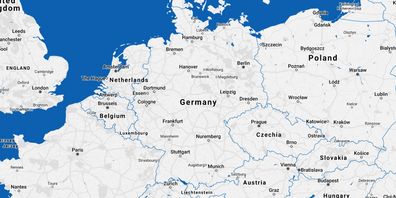
Map material from the free geographic information system OpenStreetMap. The DAAD explicitly does not adopt the information provided there (names, boundaries, etc.) in every case. No guarantee is given for the accuracy of this information.
Legend:
- Department
Basic information
- Teaching staff at the department
11
- Total number of students at the department
490
- Number of master degree students (w/o teacher qualification)
60
Teaching in core subjects
- Cultural Studies: 0%
- Literature: 57.1%
- Regional Sciences: 0%
- Linguistics: 42.9%
- Other fields: 0%
Support during the study entry phase
- Total score for support in the study entry phase
10/14 points
Research
- Publications per professor
no data
- Doctorates per professor
0.1
Students' assessments on undergraduate, presence-learning-courses
- Teacher support
- Support in studies
- Courses offered
- Study organisation
- Exam organisation
- Digital teaching elements
- Teaching foreign language skills
- Research orientation
- Rooms
- Library
- IT-infrastructure
- Overall study situation
- Return rate of the questionnaires
no data
Further information provided by the department
Special features regarding teaching
The institute offers a wide range of small seminars with a good tutor-student ratio, and the practical language training is based on modern language-teaching methods. Some of the theoretical classes are also held in the foreign language and their subject matter is often linked to current research projects, which students can also write the final dissertations on. Students who spend part of their degree in a Romance-speaking country can have their academic achievements gained there systematically recognised.
Special features regarding the international orientation
The institute has 26 ERASMUS partnerships with Spanish, French and Italian universities; Student exchange cooperation agreements are in place with universities in Canada, the United States and Latin America. Students have the possibility to do a double degree in Ibero and Italo-Romance studies and a joint degree in the field of Franco-Romance studies. 70 % of the MA The Americas/Las Américas students come from Latin America. Regular international visiting lecturers promote the intercultural dimension in teaching and research.
Special features regarding the equipment
The institute offers students access to a large number of academic databases (e.g. subject-specific bibliographies, full-text databases, e-journals and e-books), and their use is also systematically integrated into research and teaching. Electronic language corpora are created as part of linguistic research projects, which are used in teaching and are also made available for final dissertations. The electronic media are used via the technical equipment in the seminar and library rooms.
Special features regarding research activities
The DFG-funded Heisenberg professorship conducts research projects on the representation of reality in contemporary narratives and on the interaction between literature and the visual arts in early modern times. Other linguistics projects financed by the VW Foundation and the FAU deal with social attitudes towards multilingualism and language contact in the Caribbean of colonial times and the present.
Other special features
In addition to offering classes for the Romance courses (BA, MA, teacher training), the institute's classes are also an integral part of interdisciplinary degree courses, especially MA courses (e.g. MA Literature – intermedial and intercultural, MA The Americas – Las Américas, MA Linguistics), but also BAs (BA Literature & Book). Conversely, the classes of other BA/MA and teacher training courses can be systematically integrated into the course. The possibility of completing practicals in a Romance-speaking country completes the range of offers of the degree course.
Website of the Student Council
online-application
Legend
Groups
green
yellow
red
not specified
Acronyms
(S) = Students' judgements
(F) = Facts
(P) = Professors' judgements
Units
Value in percent
Value in points
Euro
Thousand Euro
Last Update 2022: Data collected by the
CHE Center for Higher Education
