
Two students in library

CHE University Ranking

Law, Department

Fachbereich Rechtswissenschaft

Justus-Liebig-Universität Gießen

Fachbereich Rechtswissenschaft
Licher Straße 72
D-35394 Gießen
Telephone: +49 641 99-21101
https://www.uni-giessen.de/de
Uni Gießen
Department on the internet
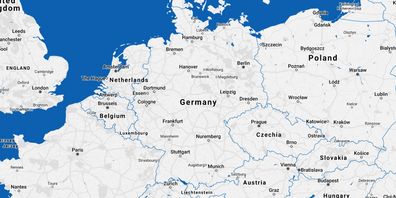
Map of Germany

Activate DAAD map

To activate the map, click on the "Show map" button. We would like to point out that data will be transmitted to OpenStreetMap after activation. You can find out more in our privacy policy. You can revoke your consent to the transmission of data at any time.

Map material from the free geographic information system OpenStreetMap. The DAAD explicitly does not adopt the information provided there (names, boundaries, etc.) in every case. No guarantee is given for the accuracy of this information.

Legend:

  • Department

Basic information

Total number of students at the department

1,700

Number of master degree students (w/o teacher qualification)

30

Support during the study entry phase

Total score for support in the study entry phase

12/14 points

Results of study

Exam results

no data

Exam preparation

8/8 points

Research

Doctorates per professor

0.5

Students' assessments on undergraduate, presence-learning-courses

Career and practical orientation
Learning and working spaces
Teacher support
Support in studies
Courses offered
Study organisation
Exam organisation
Digital learning
Assistance with exam preparation
Share of external repetitions visited

41.3%

Introduction to scientific work
Rooms
Library
Overall study situation
Return rate of the questionnaires

101

Further information provided by the department

Special features regarding teaching in the bachelor's degree programme

Gießen model (small working groups parallel to lectures). Practice-oriented teaching incorporates high-calibre practitioners (judges at the Federal Administrative Court, Federal Court of Justice, top lawyers), especially in the specialisations, key qualifications, in moot courts, legal clinics and practitioner seminars. Free comprehensive exam preparation: UniRep; (formerly MiniRep). Teaching in English, French and Spanish. Strongly interdisciplinary teaching with bridges to social science, focus: Peace and conflict research, digitalisation, innovative/current cross-cutting themes. Mediation training, regular evaluation; Visiting lecturer from University of Madison (USA).

Special features regarding teaching in the master's programmes

Gießen model (small working groups parallel to lectures). Practice-oriented teaching incorporates high-calibre practitioners (judges at the Federal Administrative Court, Federal Court of Justice, top lawyers), especially in the specialisations, key qualifications, in moot courts, legal clinics and practitioner seminars. Free comprehensive exam preparation: UniRep; (formerly MiniRep). Teaching in English, French and Spanish. Strongly interdisciplinary teaching with bridges to social science, focus: Peace and conflict research, digitalisation, innovative/current cross-cutting themes. Mediation training, regular evaluation; Visiting lecturer from University of Madison (USA).

Special features regarding the international orientation

Instituto CAPAZ (DAAD Centre of Excellence) to promote the German-Columbian peace process; Hesse International winter university (online winter school); Franz von Liszt Institute for International Law and Comparative Law; MJI with a focus on European/international law with an international phase; focus on European law with international law; international excursions; L.M. German law; LL.M. partner univ. Wisconsin Law School; Refugee Law Clinic; Cooperation with the Leibniz Institute PRIF; international moot courts (including Willem C. Vis Arbitration, Harvard World MUN); Cooperation with Univ. Fed. do Grande do Sul (Brazil); VIP (Virtual International Programme); EU Peace University Alliance

Special features regarding the equipment

UB, Law branch library:308,000 volumes, 448 current journals (print); 1200 special prints, 276 individual workspaces, 44 group workspaces; 7 research Pcs; copying, printing and scanning facilities; numerous online databases with remote access for students (including juris; Staudinger; Westlaw; beck-online plus various specialist and other modules; beck-eBib; Wolters Kluwer; HeinOnline); electronic loan and return; European Documentation Centre; classrooms with modern media technology (projector, whiteboard, loudspeaker); WiFi eduroam; parent-child room. Complete accessibility in the lecture hall building and the library (including lift, toilet).

Special features regarding research activities

Broad, excellent profiling on the rule of law, sustainability and artificial intelligence; Research Network Culture and Conflict with internationally visible cutting-edge research and third-party funding (especially DFG, EU); Migration and Human Rights, Refugee Law (Refugee Law Clinic), Amok. Institutes: CAPAZ Peace and Conflict Research; Lawyer-oriented legal education; International law and comparative law (Franz von Liszt); Basic research (Rudolf-von-Jhering; MPI Director), Criminology. Practical seminars (labour and environmental law, criminology, health law).

Other special features

Start of studies in semester. Third semester Legal English training (UNIcertIII certificate); park-like campus grounds with historic administration buildings near the centre with very good public transport links, good parking directly on campus, old trees, flower meadows, table football and modern study infrastructure (classrooms, library with group work rooms, cafeteria with lunch specials, professorships, examination office, dean's office), personal atmosphere, proximity and responsiveness, short walking distances, rental bike system; ELSA Giessen e.V.; Just Legal Tech e.V.; BfN Sustainability Office with central/decentralised sustainability officer.

Further information on research activities

Further information about study entry phase

Information on access restrictions

Website of the Student Council

online-application

Legend

Groups

green

top group

yellow

middle group

red

bottom group
Not specified
not specified

Acronyms

(S) = Students' judgements

(F) = Facts

(P) = Professors' judgements

Units

Value in percent

Value in points

Euro

Thousand Euro

Last Update 2026: Data collected by the CHE Center for Higher Education