


CHE University Ranking
Filter for projects
Psychology, Department
Philosophische Fakultät
Rheinische Friedrich-Wilhelms-Universität Bonn
Philosophische Fakultät
Institut für Psychologie
Kaiser-Karl-Ring 9
D-53111 Bonn
Telephone: +49 228 73-4387
https://www.uni-bonn.de
Uni Bonn
Department on the internet
Online application
Student body
Institut für Psychologie
Kaiser-Karl-Ring 9
D-53111 Bonn
Telephone: +49 228 73-4387
https://www.uni-bonn.de
Uni Bonn
Department on the internet
Online application
Student body
Degree courses with details
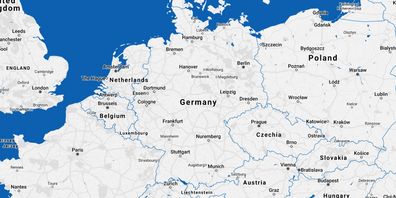
Map material from the free geographic information system OpenStreetMap. The DAAD explicitly does not adopt the information provided there (names, boundaries, etc.) in every case. No guarantee is given for the accuracy of this information.
Legend:
- Department
Basic information
- Total number of students at the department
910
- Number of master degree students (w/o teacher qualification)
330
Support during the study entry phase
- Total score for support in the study entry phase
10/14 points
Research
- Publications per academic
1.8
- Citations per publication
3.4
- Third party funds per academic
13,100 €
- Doctorates per professor
0.5
Students' assessments on undergraduate, presence-learning-courses
- Teacher support
- Support in studies
- Courses offered
- Study organisation
- Exam organisation
- Digital teaching elements
- Research orientation
- Offers for career orientation
- Rooms
- Library
- IT-infrastructure
- Overall study situation
- Return rate of the questionnaires
61
Students' assessments on consecutive master's degree courses
- Teacher support
- Support in studies
- Digital teaching elements
- Courses offered
- Study organisation
- Transition to Master's studies
- Research orientation
- Overall study situation
- Return rate of the questionnaires
39
Further information provided by the department
Special features regarding teaching
Broadly structured, polyvalent Bachelor's and Master's courses; in addition to the usual offers (including compatibility with the new Psychotherapists Act), there are also courses offered in cognitive neuroscience, legal psychology and in the field of evaluation research.
Special features regarding the international orientation
Cooperation with many international universities and institutions, including King's College, University of Melbourne, Universidad de Extremadura (Badajoz, Spain), Johannes Kepler University (Linz, Austria), the University of Melbourne (Australia), the Hebrew University of Jerusalem (Israel), Universidad de Extremadura, Brunel University London, Chinese Academy of Sciences Beijing ‘the safe path – Verkehrspsychologische Untersuchungen GmbH (Vienna)’
There is a large Erasmus offer for stays abroad and internships abroad, but no BIP
Special features regarding the equipment
Laboratory of Molecular Genetics; Two EEG laboratories; Eye movement tracking measurement.
Special features regarding research activities
incl.: Oculomotor skills, psychopharmaceuticals, brain function, biopsych. personality models, identification of deception processes with the help of ERPs, ERP research on attention processes and motivation, intelligence models and tests, criminal psychology, right-wing populism, diagnostics of sexual preferences, comparative cultural investigation of relationships, decision-making behaviour, neuroeconomics, technostress, artificial int., molecular genetics, mentoring, pol. skills and emotions in the workplace (‘Dark Triad’); Cooperative ventures include: King's College, ZI Mannheim, Center for Economics, Krim. Service of the Free State of Saxony
Further information on research activities
Legend
Groups
green
yellow
blue
not specified
Acronyms
(S) = Students' judgements
(F) = Facts
(P) = Professors' judgements
Units
Value in percent
Value in points
Euro
Thousand Euro
Last Update 2022: Data collected by the
CHE Center for Higher Education
