


Psychology, Department
Philosophische Fakultät und Fachbereich Theologie
Friedrich-Alexander-Universität Erlangen-Nürnberg
Philosophische Fakultät und Fachbereich Theologie
Institut für Psychologie
Nägelsbachstraße 49a
D-91052 Erlangen
Telephone: +49 9131 85-20887
https://www.fau.de
Uni Erl.-Nürnb./Erlangen
Department on the internet
Institut für Psychologie
Nägelsbachstraße 49a
D-91052 Erlangen
Telephone: +49 9131 85-20887
https://www.fau.de
Uni Erl.-Nürnb./Erlangen
Department on the internet
Degree courses with details
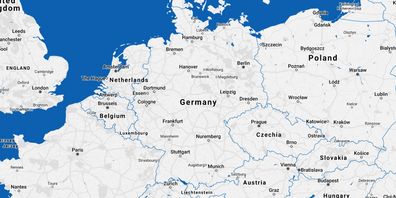
Map material from the free geographic information system OpenStreetMap. The DAAD explicitly does not adopt the information provided there (names, boundaries, etc.) in every case. No guarantee is given for the accuracy of this information.
Legend:
- Department
Basic information
- Total number of students at the department
670
- Number of master degree students (w/o teacher qualification)
240
Support during the study entry phase
- Total score for support in the study entry phase
6/14 points
Research
- Publications per academic
3.6
- Citations per publication
7.1
- Third party funds per academic
99,900 €
- Doctorates per professor
0.7
Students' assessments on undergraduate, presence-learning-courses
- Teacher support
- Support in studies
- Courses offered
- Study organisation
- Exam organisation
- Digital teaching elements
- Research orientation
- Offers for career orientation
- Rooms
- Library
- IT-infrastructure
- Overall study situation
- Return rate of the questionnaires
36
Students' assessments on consecutive master's degree courses
- Teacher support
- Support in studies
- Digital teaching elements
- Courses offered
- Study organisation
- Transition to Master's studies
- Research orientation
- Overall study situation
- Return rate of the questionnaires
49
Further information provided by the department
Special features regarding teaching
The institute places a particular emphasis on ensuring that students actively participate as early on as possible in processes that are important for psychological research and practice. For this purpose, for example, a large number of project seminars are offered in which students can actively participate in the development, application and evaluation of psychological processes. The tools necessary for this are available in various forms (hormone lab, video lab, outpatient clinic for psychological psychotherapy, technology for managing behaviour in experiments).
Special features regarding the international orientation
A large number of international (e.g. EU-funded) research projects demonstrate the institute's involvement in a whole series of transnational research collaborations. Students are also systematically supported in this respect in order to expand their subject-specific skills and broaden their range of experience by gaining relevant experience abroad. Alongside the academically essential collaboration with Anglo-American nations, the institute also collaborates intensively with (eastern) European, Asian, Arab and South American countries.
Special features regarding the equipment
The institute has excellent technical equipment in all research areas. By way of example, the psychoimmunological, molecular-biological and hormone labs are noteworthy special features where complex biological analytical procedures can be carried out to an outstanding level of quality. Over the past few years, an outpatient clinic for psychological psychotherapy has also been established at the institute, where psychotherapeutic processes can be systematically monitored and analysed using high-quality camera systems.
Special features regarding research activities
Research at the faculty focuses on a variety of current psychological topics and issues. For example, it is being investigated across disciplines how modern means of communication, social media, smartphones, tablets etc. can contribute to a better understanding of psychological issues or a solution for psychological problems. Within this context, tablet-supported diagnostic methods for diagnosing dementia, health apps and online intervention methods, for example, are being developed and evaluated in practice in larger research projects.
Other special features
Other attractive options for studying or working at FAU result from specific support for female junior academics and from the FAU Graduate School. As examples of the benefits of this support for junior academics at the institute, it should be pointed out that junior academics of FAU have already received a number of awards from the German Psychological Society and its working groups, and that the FAU Prize for Doctoral Research in the Social Sciences [sozialwissenschaftliche Promotionspreis] has already gone to individuals in the field of psychology on several occasions.
Further information on research activities
Website of the Student Council
online-application
Legend
Groups
green
yellow
red
not specified
Acronyms
(S) = Students' judgements
(F) = Facts
(P) = Professors' judgements
Units
Value in percent
Value in points
Euro
Thousand Euro
Last Update 2022: Data collected by the
CHE Center for Higher Education
