

CHE University Ranking
Filter for projects
German Language and Literature, Department
Fakultät Geistes- und Erziehungswissenschaften
Technische Universität Carolo-Wilhelmina zu Braunschweig
Fakultät Geistes- und Erziehungswissenschaften
Institut für Germanistik
Bienroder Weg 80
D-38106 Braunschweig
Telephone: +49 531 391-8636
https://www.tu-braunschweig.de
TU Braunschweig
Department on the internet
Online application
Student body
Institut für Germanistik
Bienroder Weg 80
D-38106 Braunschweig
Telephone: +49 531 391-8636
https://www.tu-braunschweig.de
TU Braunschweig
Department on the internet
Online application
Student body
Degree courses with details
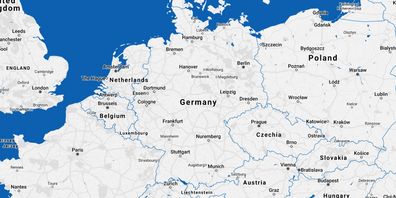
Map material from the free geographic information system OpenStreetMap. The DAAD explicitly does not adopt the information provided there (names, boundaries, etc.) in every case. No guarantee is given for the accuracy of this information.
Legend:
- Department
Basic information
- Teaching staff at the department
18
- Total number of students at the department
570
Teaching in core subjects
- German as a foreign language: 0%
- Ancient German Literature: 13.9%
- Modern Literature: 30.6%
- Linguistics: 0%
- Historic Linguistics: 22.2%
- Other fields: 33.3%
Support during the study entry phase
- Total score for support in the study entry phase
12/14 points
Students' assessments on undergraduate, presence-learning-courses
- Teacher support
- Support in studies
- Courses offered
- Study organisation
- Exam organisation
- Digital teaching elements
- Teaching foreign language skills
- Research orientation
- Rooms
- Library
- IT-infrastructure
- Overall study situation
- Return rate of the questionnaires
no data
Further information provided by the department
Special features regarding teaching
The research- and practice-oriented teaching, which encompasses all areas of German studies, features digital and innovative components, some of which were developed within as part of sponsored innovation projects (e.g. mediaeval learning app with city tour). The additional study programme DaF/DaZ adds to the spectrum of topics, as do numerous guest lectures, e.g. as part of the poetics lectureship with gender profile and the public-oriented lecture series. This is supplemented by regular excursions, creative writing classes and public project presentations.
Special features regarding the international orientation
The institute is involved in several Erasmus partnerships, including with universities in Ankara, Bari, České Budějovice, Krakow, Naples, Stockholm and Turku, as well as a closer partnership with Nizhny Novgorod. The scientific staff maintains close links with German-speaking countries and with German studies institutes in many countries of the world. In German linguistics in particular, the department participates in the English-language scientific discourse with scientific partnerships (partners are in Japan, Canada, the United Kingdom, Belgium, Spain, the Netherlands, the USA and Slovakia, among others).
Special features regarding the equipment
The seminar rooms on the humanities campus, which are also used by German studies, are all equipped with WiFi, projectors and document cameras. The campus also has a central computer pool and, at faculty level, learning workshops with a wide range of technical equipment. The institute also has two Smart Boards. The university library offers access to various electronic resources as well as subject-specific databases (author database, BDSL). The institute has a license for game-based learning (Actionbound).
Special features regarding research activities
Projects with third-party funding: ‘MehrSprache2’ (Langlotz with other disciplines), ‘Von der Avantgarde zum Algorithmus: Automatisierte Kreativität in Literatur und Musik’ (Röhnert with other disciplines). Digitale Edition deutschsprachiger Autorinnen des 18. Jahrhunderts (Schöll), Database project on Medientransfer Film/Theater (Schöll), Manual on ‘Ästhetische Theorie und Geschichte der Poetikprofessur’ (Schöll), dictionary project: ‘Schriftlinguistik’ (Neef); Journals (‘Germanisch-Romanische Monatsschrift’ (Berghahn), ‘Euphorion’ (Standke), ‘Literatur im Unterricht’ (Standke))
Other special features
Cooperation arrangements in research and instruction with other disciplines within the department (especially English langauge and literature, educational and didactics of physics), with disciplines in other departments within the scope of the Master’s degree programme ‘Culture of the Technical-Scientific World’, and in the context of the central research fields of the TU (mobility, city of the future), with the TU language centre (study programme in German as a foreign language/German as a second language), Braunschweig University of Art and with non-university research institutions (e.g. Leibniz Institute for Educational Media | Georg Eckert Institute, Herzog August Bibliothek Wolfenbüttel, Institute for Braunschweig Regional History)
Further information on research activities
Information on access restrictions
Legend
Groups
green
yellow
blue
not specified
Acronyms
(S) = Students' judgements
(F) = Facts
(P) = Professors' judgements
Units
Value in percent
Value in points
Euro
Thousand Euro
Last Update 2022: Data collected by the
CHE Center for Higher Education
