


CHE University Ranking
Filter for projects
Psychology, Department
Fakultät für Psychologie
Ruhr-Universität Bochum
Fakultät für Psychologie
Universitätsstraße 150/Gebäude GAFO 04/262
D-44780 Bochum
Telephone: +49 234 322-4606
https://www.ruhr-uni-bochum.de/de
Uni Bochum
Department on the internet
Online application
Student body
Universitätsstraße 150/Gebäude GAFO 04/262
D-44780 Bochum
Telephone: +49 234 322-4606
https://www.ruhr-uni-bochum.de/de
Uni Bochum
Department on the internet
Online application
Student body
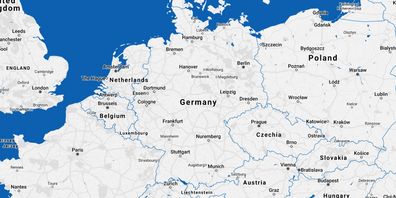
Map material from the free geographic information system OpenStreetMap. The DAAD explicitly does not adopt the information provided there (names, boundaries, etc.) in every case. No guarantee is given for the accuracy of this information.
Legend:
- Department
Basic information
- Total number of students at the department
1,400
- Number of master degree students (w/o teacher qualification)
220
Support during the study entry phase
- Total score for support in the study entry phase
10/14 points
Research
- Publications per academic
4.2
- Citations per publication
5.3
- Third party funds per academic
161,400 €
- Doctorates per professor
1
Students' assessments on undergraduate, presence-learning-courses
- Teacher support
- Support in studies
- Courses offered
- Study organisation
- Exam organisation
- Digital teaching elements
- Research orientation
- Offers for career orientation
- Rooms
- Library
- IT-infrastructure
- Overall study situation
- Return rate of the questionnaires
55
Students' assessments on consecutive master's degree courses
- Teacher support
- Support in studies
- Digital teaching elements
- Courses offered
- Study organisation
- Transition to Master's studies
- Research orientation
- Overall study situation
- Return rate of the questionnaires
54
Further information provided by the department
Special features regarding teaching
The faculty offers students broad, subject-specific, expert training using various teaching formats. There are opportunities for specific specialisation (particularly in: Business Psychology, Cognitive Neuroscience, Clinical Psychology (adults, children and young people)). Teaching is closely linked with current research and independent research projects. Students learn to work and generate knowledge independently and to describe, reflect on and evaluate tasks and issues systematically. APPR
Special features regarding the international orientation
The Faculty of Psychology has outstanding international links. Erasmus agreements have been concluded with 11 universities. The students are encouraged to complete a semester or work placement abroad. There is also a joint degree programme with the University of Istanbul and a German-French doctorate agreement (cotutelles) with the University of Marseille. With its Master of Cognitive Science, the faculty offers another interdisciplinary degree course taught in English. The faculty is also involved in the International Graduate School of Neuroscience.
Special features regarding the equipment
The faculty has a large number of excellently equipped laboratories (EEG systems, eye-tracking systems, genetic analysis devices, electrophysiology, virtual reality etc.) as well as sufficient assessment and therapy rooms. The technical equipment is state-of-the-art. The faculty has its own well-equipped departmental library. It is possible to access all relevant journals (electronically). The faculty also has its own workshop, which designs and produces mechanical and electronic investigation devices.
Special features regarding research activities
Among others, the department boasts a Leibniz Prize winner, Prof. Dr. Drs. Onur Güntürkün, and a Humboldt professorship, Prof. Dr. Jürgen Margraf. All Chairs have high-quality research projects (ERC Grants, Collaborative Research Centre of the German Research Foundation (DFG), DFG Research Unit, DFG Priority Programme, etc.). Both animal and human experimental research as well as clinical (patient) research is conducted at the faculty. Business psychology, cognitive neuroscience and clinical psychology are the key areas.
Other special features
The faculty is also characterised by other structure-related collaborations, research projects and awards: ERC Grants, Collaborative Research Centre (DFG) ‘Integration and Representation of Sensory Processes’; Humboldt Professorship Prof. Jürgen Margraf; Leibniz Prize winner Prof. Onur Güntürkün; Research Unit (DFG) "Extinction Learning: Behavioural, Neural and Clinical Mechanisms"; International Graduate School of Neuroscience, Research Department of Neuroscience, Centre for Psychotherapy, university outpatient clinic; Priority Programme (DFG) "Intentional Forgetting" and similar
Further information on research activities
Legend
Groups
green
yellow
blue
not specified
Acronyms
(S) = Students' judgements
(F) = Facts
(P) = Professors' judgements
Units
Value in percent
Value in points
Euro
Thousand Euro
Last Update 2022: Data collected by the
CHE Center for Higher Education
