
Two students in library

CHE University Ranking

Education Science, Department

Kultur-, Sozial- und Bildungswissenschaftliche Fakultät

Humboldt-Universität zu Berlin

Kultur-, Sozial- und Bildungswissenschaftliche Fakultät
Institut für Erziehungswissenschaften
Geschwister-Scholl-Straße 7
D-10099 Berlin
Telephone: +49 30 2093-4080
https://www.hu-berlin.de/en?set_language=en
HU Berlin
Department on the internet
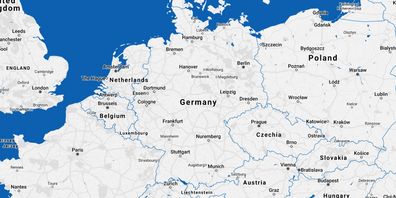
Map of Germany

Activate DAAD map

To activate the map, click on the "Show map" button. We would like to point out that data will be transmitted to OpenStreetMap after activation. You can find out more in our privacy policy. You can revoke your consent to the transmission of data at any time.

Map material from the free geographic information system OpenStreetMap. The DAAD explicitly does not adopt the information provided there (names, boundaries, etc.) in every case. No guarantee is given for the accuracy of this information.

Legend:

  • Department

Basic information

Total number of students at the department

630

Number of master degree students (w/o teacher qualification)

260

Teaching in core subjects

  • School paedagogics/teaching and learning: 5.6%
  • Childhood paedagogics: 0%
  • Adult education: 38.9%
  • Social paedagogics/social work: 0%
  • General paedagogics: 44.4%
  • Research methodology: 11.1%

Support during the study entry phase

Total score for support in the study entry phase

11/16 points

International orientation

Outgoing students

1.0%

Job market- and career-orientation

Percentage of teaching by practitioners

5.0%

Percentage of teaching by practitioners, master's

6.0%

Bachelor theses in cooperation with work environment

no data

Master theses in cooperation with work environment

no data

Research

Publications per professor

4.6

Third party funds per academic

39,200 €

Doctorates per professor

0.8

Students' assessments on undergraduate, presence-learning-courses

Learning and working spaces

Teacher support

Support in studies

Courses offered
Study organisation
Exam organisation

Digital teaching elements

Introduction to scientific work

Offers for career orientation

Practical orientation in teaching

Support for stays abroad

Rooms

Library

IT-infrastructure

Overall study situation
Return rate of the questionnaires

15

Further information provided by the department

Special features regarding teaching in the bachelor's degree programme

Students can choose between two specialisations in Module 5: Emergence and Institutionalisation or Problems of Institutions. The BA Education 7 module offers a choice of four profile areas: General educational science, historical and cultural educational research, adult education/continuing education with a focus on counselling in education, career and employment as well as selected topics from educational psychology. Cross-module perspectives include education and learning in the context of difference, social inequality, power and gender.

Special features regarding teaching in the master's programmes

There are eight available research profiles central to the MA Education (EWI): Educational theory + research, historical + cultural educational research, comparative + international educational science, empirical educational, university + science research, empirical school + teaching research, adult/continuing education research, reflective business education + vocational training research, educational women's + gender research. In the MA in Adult Education/Lifelong Learning (EB/LL), preparation for teaching, planning and managerial roles is central, as is the teaching and research area of the "Continuing Education Programme Archive Berlin/Brandenburg".

Special features regarding the international orientation

The Erasmus Office advises on Erasmus contracts and scholarships with numerous partner universities all over Europe. Currently, the institute has over 40 contracts with universities in 16 countries. On average, around 21 students successfully complete an Erasmus stay abroad each academic year, while around 15 students from abroad successfully complete a stay at the Institute of Educational Science (IfE) each academic year.

Special features regarding the equipment

The institute has three educational archives: Archiv für Reformpädagogik (progressive education archive), Weiterbildungsprogramm-Archiv (continuing education programme archive) Berlin/Brandenburg, Egon-Schütz-Archiv (Ego Schütz archive), which are (also) available for student use. Access to subject-specific databases is available through the university library. The university has state-of-the-art technical equipment (equipment for hybrid teaching, learning platforms, digital repositories, data protection-compliant AI tools, etc.)

Special features regarding research activities

Educational and learning processes, institutions and practices (in their current form, in their historical genesis and in their international references) are central research topics. Theoretical and empirical questions of educational research are addressed in a methodologically innovative and socially visible manner. Numerous projects funded by the German Research Foundation (DFG), the Federal Ministry of Education and Research (BMBF) and other third-party donors are based here. Central topics include the fundamentals of educational science, education and teaching in schools, education throughout life/lifelong learning and transitions, diversity, digitalisation, etc.

Other special features

The institute has a professorship in Educational Science with a focus on gender and diversity. The institute cooperates with the Leibniz Institute for Research and Information in Education (DIPF) as part of a research professorship in Historical Educational Research and a further professorship in Digital Humanities.

Further information on research activities

Further information about study entry phase

Information on access restrictions

Website of the Student Council

online-application

Legend

Groups

green

top group

yellow

middle group

red

bottom group
Not specified
not specified

Acronyms

(S) = Students' judgements

(F) = Facts

(P) = Professors' judgements

Units

Value in percent

Value in points

Euro

Thousand Euro

Last Update 2025: Data collected by the CHE Center for Higher Education