

Two students in library

CHE University Ranking

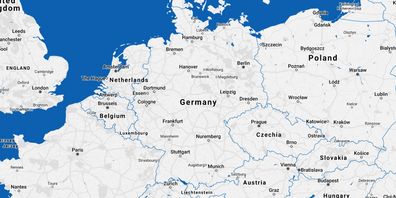
Map of Germany

Activate DAAD map

To activate the map, click on the "Show map" button. We would like to point out that data will be transmitted to OpenStreetMap after activation. You can find out more in our privacy policy. You can revoke your consent to the transmission of data at any time.

Map material from the free geographic information system OpenStreetMap. The DAAD explicitly does not adopt the information provided there (names, boundaries, etc.) in every case. No guarantee is given for the accuracy of this information.

Legend:

  • Department

Basic information

Total number of students at the department

1,440

Number of master degree students (w/o teacher qualification)

750

Support during the study entry phase

Total score for support in the study entry phase

13/16 points

International orientation

Outgoing students

2.0%

Job market- and career-orientation

Percentage of teaching by practitioners

15.0%

Percentage of teaching by practitioners, master's

20.0%

Bachelor theses in cooperation with work environment

11.2%

Master theses in cooperation with work environment

19.3%

Research

Publications per professor

Punkte im Bereich 1 bis 1,9

Third party funds per professor

31,949 €

Doctorates per professor

0.6

Research reputation

no data

Not specified

Students' assessments on undergraduate, presence-learning-courses

Career and practical orientation
Learning and working spaces
Teacher support
Support in studies
Courses offered
Study organisation
Exam organisation
Digital learning
Support for stays abroad
Rooms
Library
Overall study situation
Return rate of the questionnaires

59

Students' assessments on consecutive master's degree courses

Teacher support

Support in studies

Digital learning

Practical orientation in teaching

Courses offered

Study organisation

Transition to Master's studies

Research orientation

Support for stays abroad

Overall study situation

Return rate of the questionnaires

no data

Further information provided by the department

Special features regarding teaching in the bachelor's degree programme

In-depth teaching of methodological principles: Mathematics, Statistics, Data Analysis, Decision-Making and Game Theory, Academic and Management Skills, etc.; Recognition of the relevance of strengthening cross-cultural and social skills; complementary provision of theoretical and empirical course content; Close interlinking of teaching content and modules of Economics and Business Administration in the sense of the “single economics entity” within the faculty; Bachelor's degree programme taught completely in English since 1997; continuous development of a pool of internationally renowned visiting lecturers; Online teaching evaluation.

Special features regarding teaching in the master's programmes

In-depth education and training in quantitative and analytical methods: Econometrics, Statistics, Financial and Tax Analysis, Decision and Game Theory as well as Academic & Management Skills. Focus on international perspectives, intercultural and social skills. Close integration of theoretical and empirical content, practical case studies, projects and realistic business simulations. English-language master's programmes, exchange with internationally renowned guest lecturers and continuous online teaching evaluation.

Special features regarding the international orientation

Bachelor's/Master's/PhD programmes (ISP) taught entirely in English since 1997 with international students accounting for >50% of students; Extra ISP office with various service offerings for students; Special buddy programme for ISP freshmen; Exchange programmes with excellent partner universities around the world; Faculty recommends and supports (voluntary) "studies abroad"; Regular information events on studying abroad; Permanent contact person in-house for recognition of examination achievements abroad, new learning agreements, etc.; Research activities consistently on an international level; Global research collaborations.

Exchange universities for stay abroads

Universidad EAFIT, Colombia; Tampere University, Finland; Université Grenoble Alpes, France; Universita degli Studi di Trieste, Italy; Riga Tehniska Universitate, Latvia; Universiteit Twente, Netherlands; Universidade do Porto, Portugal; Universiatea Babes-Bolyai din Cluj-Napoca, Romania; Univerza v Lubljani, Slovenia; Universidad de Vigo, Spain; Bogazici Üniversitesi, Türkiye

Special features regarding the equipment

Very good teaching/research facilities including in the area of experimental behavioural economics, consumer behaviour, e-business ("MaXLab") or financial engineering ("FinTech lab"); Library with online access to numerous standard journals and relevant databases; Department has 60 PC cluster workstations that are state of the art; Modern faculty building (architectural award, WiFi throughout), offices/teaching rooms/labs in one place, meeting and advisory spaces in a "Faculty Centre"; Permanent media loan (notebooks, projectors, etc.) in the Dean's Office of the faculty.

Special features regarding research activities

Theoretically challenging research relevant to practice; Faculty focus area "Decision Design"; Incentive-Oriented Corporate Management and Taxation; Financial Contracts and Real Options; Institutional Economics in Internat. Management; Optimisation of Production/Logistics; Latent Influences in Consumer Behaviour; Socially differentiated entrepreneurship; Inter-disciplinary collaboration; Centre for Behavioural Brain Sciences; Research Centre for Savings Bank Development; Collaboration with the Leibniz Institute for Economic Research Halle (IWH); FINTEC lab; Magdeburg lab for experimental economic research (MaXLab).

Other special features

Very high level of internationality in student groups (ISP students from up to 40 countries);in SS 2022, over 41% of international students. Sustainability Office of OVGU - contributes to implementing OVGU's sustainability strategy. There are unique and recurring events initiated by the Sustainability Office as well as various events that are supported: Eco-social University Days; Progressive orientation weeks; "OVGU Discusses Sustainably” event format; Academic Bicycle Challenge 2022; Sustainability certificate from the OVGU - transdisciplinary, cross-curricular programme.

Further information on research activities

Information on access restrictions

Website of the Student Council

online-application

Legend

Groups

green

top group

yellow

middle group

red

bottom group
Not specified
not specified

Acronyms

(S) = Students' judgements

(F) = Facts

(P) = Professors' judgements

Units

Value in percent

Value in points

Euro

Thousand Euro

Last Update 2026: Data collected by the CHE Center for Higher Education