

CHE University Ranking
Filter for projects
Mechatronics, Department
Fakultät Elektrotechnik und Informationstechnik
Technische Universität Dresden
Fakultät Elektrotechnik und Informationstechnik
Helmholtzstraße 18
D-01069 Dresden
Telephone: +49 351 463-32281
https://tu-dresden.de
TU Dresden
Department on the internet
Online application
Student body
Helmholtzstraße 18
D-01069 Dresden
Telephone: +49 351 463-32281
https://tu-dresden.de
TU Dresden
Department on the internet
Online application
Student body
Degree courses with details
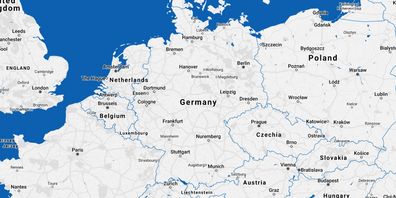
Map material from the free geographic information system OpenStreetMap. The DAAD explicitly does not adopt the information provided there (names, boundaries, etc.) in every case. No guarantee is given for the accuracy of this information.
Legend:
- Department
Basic information
- Total number of students at the department
370
- Percentage of teaching by practitioners
no data
Support during the study entry phase
- Total score for support in the study entry phase
10/14 points
Job market- and career-orientation
- Bachelor theses in cooperation with work environment
no data
Students' assessments on undergraduate, presence-learning-courses
- Teacher support
- Support in studies
- Courses offered
- Study organisation
- Exam organisation
- Digital teaching elements
- Research orientation
- Offers for career orientation
- Rooms
- Library
- IT-infrastructure
- Laboratories
- Overall study situation
- Return rate of the questionnaires
no data
Further information provided by the department
Special features regarding teaching
The Member States of the European Union have set themselves the task of standardising the education landscape across Europe. In the course of this, the degree courses have been restructured: modules and credit points aimed at enabling international comparison have been introduced. We have revised and modernised our courses of study leading to a Diplom correspondingly, but have consciously chosen to retain the globally recognised Diplom-Ingenieur (Dipl.-Ing.) qualification. In addition to our Diplom courses, we offer Master's courses in suitable subject areas for interested parties.
Special features regarding the international orientation
The Master's degree course in Nanoelectronic Systems is conducted entirely in English and is therefore aimed at English-speaking Bachelor's graduates. These may be native-speakers or foreign or German citizens who use English as a language of communication.
Special features regarding the equipment
The "Werner-Hartmann-Zentrum" (WHZ) electronics technologies centre is one of the faculty's scientific establishments. The centrepiece of the WHZ is the Werner-Hartmann Building – the high-tech lab building belonging to the Faculty of Electrical and Computer Engineering, which has been in use since October 2013. Seven professorships from four different faculty institutes currently have outstanding infrastructure conditions for teaching and research using the state-of-the-art equipment, with a total of 2,200 m² of lab space in the clean room classes ISO 8 to ISO 4.
Special features regarding research activities
The research projects listed subsequently are merely a selection and only provide a partial insight into the faculty's research activities. They are funded by the European Union, the German Research Foundation (DFG), the Federal Ministry of Education and Research and countless industry partners: Cluster of Excellence "Center for Advancing Electronics Dresden (cfAED)"; Collaborative Research Centre 912: Highly Adaptive Energy-Efficient Computing; FET Flagship programme: Human Brain Project; Federal Ministry of Education and Research (BMBF) Cluster of Excellence: Cool Silicon ; 5G Lab Germany
Further information on research activities
Legend
Groups
green
yellow
blue
not specified
Acronyms
(S) = Students' judgements
(F) = Facts
(P) = Professors' judgements
Units
Value in percent
Value in points
Euro
Thousand Euro
Last Update 2022: Data collected by the
CHE Center for Higher Education
