

Two students in library

CHE University Ranking

Electrical / Information Engineering, Department

Fakultät für Energie- und Wirtschaftswissenschaften

Technische Universität Clausthal

Fakultät für Energie- und Wirtschaftswissenschaften
Institut für Elektrische Energietechnik und Energiesysteme
Erzstraße 20
D-38678 Clausthal-Zellerfeld
Telephone: +49 5323 72-2344
https://www.tu-clausthal.de/en/
TU Clausthal
Department on the internet
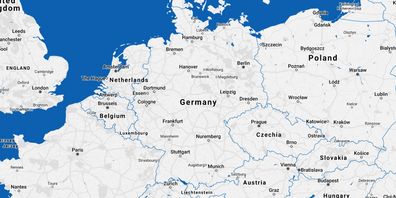
Map of Germany

Activate DAAD map

To activate the map, click on the "Show map" button. We would like to point out that data will be transmitted to OpenStreetMap after activation. You can find out more in our privacy policy. You can revoke your consent to the transmission of data at any time.

Map material from the free geographic information system OpenStreetMap. The DAAD explicitly does not adopt the information provided there (names, boundaries, etc.) in every case. No guarantee is given for the accuracy of this information.

Legend:

  • Department

Basic information

Total number of students at the department

100

Number of master degree students (w/o teacher qualification)

50

Support during the study entry phase

Total score for support in the study entry phase

11/16 points

International orientation

Outgoing students

2.0%

Job market- and career-orientation

Percentage of teaching by practitioners

3.3%

Percentage of teaching by practitioners, master's

no data

Bachelor theses in cooperation with work environment

16.7%

Master theses in cooperation with work environment

25.0%

Research

Publications per academic

0.4

Citations per publication

5.3

Third party funds per academic

106,400 €

Doctorates per professor

1.4

Students' assessments on undergraduate, presence-learning-courses

Learning and working spaces

Teacher support

Support in studies

Courses offered

Study organisation

Exam organisation

Digital teaching elements

Introduction to scientific work

Offers for career orientation

Practical orientation in teaching

Support for stays abroad

Rooms

Library

IT-infrastructure

Laboratories

Overall study situation

Return rate of the questionnaires

no data

Further information provided by the department

Special features regarding teaching in the bachelor's degree programme

Teaching is characterised by the close interlinking of fundamentals, specialisation and application. In particular, some of the advanced lectures are held by external lecturers from industry and therefore have a high degree of practical relevance. Furthermore, the content of all courses is applied and linked to a real-world problem in a project. As a result, the system concept remains in the foreground even when students pursue individual specialisation. In addition, students acquire interdisciplinary economic and legal skills.

Special features regarding teaching in the master's programmes

Teaching is characterised by the close interlinking of fundamentals, specialisation and application. In particular, some of the advanced lectures are held by external lecturers from industry and therefore have a high degree of practical relevance. Furthermore, the content of all courses is applied and linked to a real-world problem in a project. As a result, the system concept remains in the foreground even when students pursue individual specialisation. In addition, students acquire interdisciplinary economic and legal skills.

Special features regarding the international orientation

Around 60 % of students and 20 % of staff come from abroad. Collaborations in research, teaching and for the exchange of students and teaching staff exist with around 160 partner institutions. The International Centre is a central point of contact for international matters as, as for linguistic and intercultural competence. It supports teaching staff, researchers, students and non-teaching staff in the preparation, planning and execution of collaboration activities and stays abroad.

Special features regarding the equipment

Battery laboratory with equipment for impedance spectroscopy, high-current pulse generation, climatic chambers and furnace in the battery and sensor test centre and research centre for energy storage technologies (EST); flywheel-based, battery-based and capacitor-based energy storage systems; "Active distribution grids" laboratory for the investigation of converter-dominated grids; Test benches for drive trains (vibration analysis, optimised control, etc.); Test benches for regenerative electrical energy engineering; High-performance computer for energy system modelling

Special features regarding research activities

Electrical energy system: Integration of systems for energy generation, storage and use into the energy system (e.g. heat pumps, electric vehicles; Thermal energy system: Improving the combustion processes of conventional and sustainable fuels (e.g. natural gas and hydrogen); Machines & converter technology: Transfer of the properties of electrical machines to intelligent converters; Energy Storage Technology: Security and reliability of electrochemical energy stores at the cell, module and system levels

Other special features

The circular economy is the guiding principle of Clausthal University of Technology (TU) and forms the framework for research, teaching and knowledge transfer at the university. The focus is on the circular use of resources and the digital transformation of industrial processes. Clausthal University of Technology (TU) sees the diversity of students, teaching staff and employees as an asset in teaching and studying as well as a source of innovative and sustainable solutions. With equal access to opportunities and a warm, welcoming culture, we create an environment in which everyone is encouraged and valued.

Further information on research activities

Further information about study entry phase

Website of the Student Council

online-application

Legend

Groups

green

top group

yellow

middle group

red

bottom group
Not specified
not specified

Acronyms

(S) = Students' judgements

(F) = Facts

(P) = Professors' judgements

Units

Value in percent

Value in points

Euro

Thousand Euro

Last Update 2025: Data collected by the CHE Center for Higher Education