

CHE University Ranking
Filter for projects
Applied Natural Sciences, Department
Fakultät Life Sciences
Hochschule Albstadt-Sigmaringen
Fakultät Life Sciences
Anton-Günther-Straße 51
D-72488 Sigmaringen
Telephone: +49 7571 732-8242
https://www.hs-albsig.de
HS Albs.-Sig./Sigmaringen
Department on the internet
Online application
Student body
Anton-Günther-Straße 51
D-72488 Sigmaringen
Telephone: +49 7571 732-8242
https://www.hs-albsig.de
HS Albs.-Sig./Sigmaringen
Department on the internet
Online application
Student body
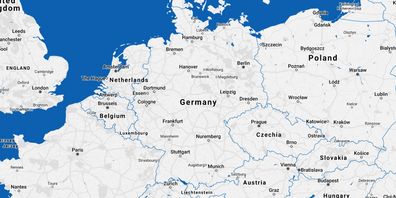
Map material from the free geographic information system OpenStreetMap. The DAAD explicitly does not adopt the information provided there (names, boundaries, etc.) in every case. No guarantee is given for the accuracy of this information.
Legend:
- Department
Basic information
- Percentage of teaching by practitioners
14.0%
- Percentage of teaching by practitioners, master's
13.5%
Support during the study entry phase
- Total score for support in the study entry phase
14/14 points
Job market- and career-orientation
- Bachelor theses in cooperation with work environment
56.1%
- Master theses in cooperation with work environment
30.1%
Research
- Cooperative doctoral degrees (in three years)
3
- Third party funds per professor
34,700 €
Further information provided by the department
Special features regarding teaching
Teaching of content with high practical relevance; link between theory and practice; Very research-oriented teaching in the Master's degree course; Interdisciplinary collaboration between the degree courses; Intensive contacts with the relevant industry and companies, e.g. guest lecturers, company tours, student final theses and project work; Close contact to alumni; individual support for students, e.g. Start2Research research-support programme for students; many supervision options in the fundamentals of the natural sciences and engineering; very good staff-student ratio; Hybrid offers
Special features regarding the international orientation
Foreign-language courses via the Career Center; Student advice and counselling, and informational events through the International Academic Office; Degree course-specific foreign student advisers for individual subject-specific study and work placement guidance; Cooperation with numerous internationally active companies as well as laboratories/institutes; Consideration of international, English-speaking regulations and guidelines as part of the courses; Selected foreign-language or bilingual courses, English-language elements in each module; Lecturers with relevant international experience; Double-degree offers
Special features regarding the equipment
Excellent media technology in all lecture halls for use in hybrid teaching; Modern, contemporary laboratories with state-of-the-art equipment, including pharmaceutical clean rooms class C and D, large kitchen/sensor area, state-of-the-art laboratory automation systems, S1/S2 laboratories with molecular biological equipment (e.g. real-time PCR, flow cytometer), stem cell laboratory, fluorescence microscopy, instrumental analysis, microbiology, cleaning technology, instrument technology, control engineering, brewing plant; Many fee-based special databases are available (e.g. DIN standards, FSTA, GMP-Berater)
Special features regarding research and development
Key research area health, nutrition, biomedicine with cooperative doctoral college InViTe with the University of Konstanz, cooperative doctorates with other universities; Key content areas: In vitro test systems (DNA repair, ageing, skin, stem cell and 3D tumour models, mitochondrial function, neurotoxicity), diagnostics and biomarkers (premature and newborn, CHO cell proteomics), allergen analysis, laboratory automation, counterfeit-proof drugs, drug release, sustainable food production, equipment technology, healthy nutrition / nudging, cleaning and hygiene, microbiology
Other special features
Personal atmosphere between students and teaching staff; Career centre with a broad range of services to meet requirements; Numerous excursions, company tours, trade fair visits; Research building (model factory) spanning approx. 2000 m² newly opened for EUR 19 million in 2021, offering the most up-to-date research areas for all of the degree courses in the department; Hochschule Albstadt-Sigmaringen certified as a family-friendly university; Beautiful campus close to nature with short distances, view of the castle and relaxation loungers; Good housing situation
Further information on research activities
Biotechnology
Facts
- Total number of students at the department
130
- Number of master degree students (w/o teacher qualification)
70
Students' assessments on undergraduate, presence-learning-courses
- Teacher support
- Support in studies
- Courses offered
- Study organisation
- Exam organisation
- Digital teaching elements
- Laboratory internships
- Offers for career orientation
- Support during practical semester
- Rooms
- Library
- IT-infrastructure
- Overall study situation
- Return rate of the questionnaires
72
Chemical Engineering
Facts
- Total number of students at the department
220
- Number of master degree students (w/o teacher qualification)
no data
Students' assessments on undergraduate, presence-learning-courses
- Teacher support
- Support in studies
- Courses offered
- Study organisation
- Exam organisation
- Digital teaching elements
- Laboratory internships
- Offers for career orientation
- Support during practical semester
- Rooms
- Library
- IT-infrastructure
- Overall study situation
- Return rate of the questionnaires
71
Interdisciplinary Applied Natural Sciences
Facts
- Total number of students at the department
280
- Number of master degree students (w/o teacher qualification)
80
Students' assessments on undergraduate, presence-learning-courses
- Teacher support
- Support in studies
- Courses offered
- Study organisation
- Exam organisation
- Digital teaching elements
- Laboratory internships
- Offers for career orientation
- Support during practical semester
- Rooms
- Library
- IT-infrastructure
- Overall study situation
- Return rate of the questionnaires
82
Legend
Groups
green
yellow
blue
not specified
Acronyms
(S) = Students' judgements
(F) = Facts
(P) = Professors' judgements
BT = Biotechnology
CE = Chemical Engineering
IntNatSci = Interdisciplinary Applied Natural Sciences
Units
Value in percent
Value in points
Euro
Thousand Euro
Last Update 2022: Data collected by the
CHE Center for Higher Education
