
Two students in library

CHE University Ranking

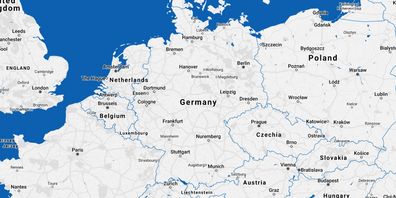
Map of Germany

Activate DAAD map

To activate the map, click on the "Show map" button. We would like to point out that data will be transmitted to OpenStreetMap after activation. You can find out more in our privacy policy. You can revoke your consent to the transmission of data at any time.

Map material from the free geographic information system OpenStreetMap. The DAAD explicitly does not adopt the information provided there (names, boundaries, etc.) in every case. No guarantee is given for the accuracy of this information.

Legend:

  • Department

Support during the study entry phase

Total score for support in the study entry phase

9/16 points

International orientation

Outgoing students

no data

Job market- and career-orientation

Percentage of teaching by practitioners

no data

Percentage of teaching by practitioners, master's

no data

Bachelor theses in cooperation with work environment

88.5%

Master theses in cooperation with work environment

90.0%

Research

Cooperative doctoral degrees (in three years)

no data

Not specified
Third party funds per professor

35,200 €

Further information provided by the department

Special features regarding teaching in the bachelor's degree programme

Wide study offer at the interface of natural and engineering sciences, both nationally and internationally; Many options for continuing education; Online degree course in Regulators Affairs (Master's degree course, 100 % online); Very good equipment for laboratory internships

Special features regarding the international orientation

international degree courses: Master's degree in Biomedical Engineering (jointly with the University of Lübeck); Master's degree in Medical Microtechnology (jointly with the University of Lübeck and Syddansk University, Sonderborg/DK); Bachelor’s degree in Environmental Engineering: Cooperation with the East China University of Science and Technology (double degree programme)

Special features regarding the equipment

Very good laboratory equipment, especially in biomedical engineering, auditory acoustics and applied chemistry

Special features regarding research and development

Very diverse range of research in the fields of chemistry, physics, food technology and environmental engineering. Research focuses in particular on the field of medical technology and hearing acoustics.

Further information on research activities

Further information about study entry phase

Website of the Student Council

online-application

Chemical Engineering

Facts

Total number of students at the department

110

Number of master degree students (w/o teacher qualification)

10

Students' assessments on undergraduate, presence-learning-courses

Learning and working spaces
Teacher support
Support in studies
Courses offered
Study organisation
Exam organisation
Digital teaching elements
Laboratory internships
Introduction to scientific work
Offers for career orientation
Support during practical semester
Practical orientation in teaching
Support for stays abroad

no data

Rooms
Library
IT-infrastructure
Overall study situation
Return rate of the questionnaires

26

Environmental Engineering

Facts

Total number of students at the department

130

Number of master degree students (w/o teacher qualification)

10

Students' assessments on undergraduate, presence-learning-courses

Learning and working spaces
Teacher support
Support in studies
Courses offered
Study organisation
Exam organisation
Digital teaching elements
Laboratory internships
Introduction to scientific work
Offers for career orientation
Support during practical semester
Practical orientation in teaching
Support for stays abroad
Rooms
Library
IT-infrastructure
Overall study situation
Return rate of the questionnaires

41

Medical technology

Facts

Total number of students at the department

490

Number of master degree students (w/o teacher qualification)

190

Students' assessments on undergraduate, presence-learning-courses

Learning and working spaces
Teacher support
Support in studies
Courses offered
Study organisation
Exam organisation
Digital teaching elements
Laboratory internships
Introduction to scientific work
Offers for career orientation
Support during practical semester
Practical orientation in teaching
Support for stays abroad
Rooms
Library
IT-infrastructure
Overall study situation
Return rate of the questionnaires

45

Physical Technology

Facts

Total number of students at the department

60

Number of master degree students (w/o teacher qualification)

10

Students' assessments on undergraduate, presence-learning-courses

Learning and working spaces

no data

Teacher support
Support in studies
Courses offered
Study organisation
Exam organisation
Digital teaching elements

no data

Laboratory internships

no data

Introduction to scientific work

no data

Offers for career orientation

no data

Support during practical semester

no data

Practical orientation in teaching

no data

Support for stays abroad

no data

Rooms

no data

Library

no data

IT-infrastructure

no data

Overall study situation

no data

Return rate of the questionnaires

15

Legend

Groups

green

top group

yellow

middle group

red

bottom group
Not specified
not specified

Acronyms

(S) = Students' judgements

(F) = Facts

(P) = Professors' judgements

CE = Chemical Engineering

EnvE = Environmental Engineering

MT = Medical technology

PT = Physical Technology

Units

Value in percent

Value in points

Euro

Thousand Euro

Last Update 2025: Data collected by the CHE Center for Higher Education