


Process Engineering, Department
Fakultät Life Sciences
Hochschule für Angewandte Wissenschaften Hamburg
Fakultät Life Sciences
Department Verfahrenstechnik
Ulmenliet 20
D-21033 Hamburg
Telephone: +49 40 42875-0
https://www.haw-hamburg.de
HAW Hamburg
Department on the internet
Department Verfahrenstechnik
Ulmenliet 20
D-21033 Hamburg
Telephone: +49 40 42875-0
https://www.haw-hamburg.de
HAW Hamburg
Department on the internet
Degree courses with details
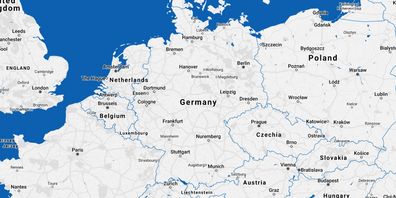
Map material from the free geographic information system OpenStreetMap. The DAAD explicitly does not adopt the information provided there (names, boundaries, etc.) in every case. No guarantee is given for the accuracy of this information.
Legend:
- Department
Basic information
- Total number of students at the department
290
- Percentage of teaching by practitioners
15.0%
Support during the study entry phase
- Total score for support in the study entry phase
11/14 points
Job market- and career-orientation
- Bachelor theses in cooperation with work environment
90.6%
Research
- Third party funds per professor
40,800 €
Students' assessments on undergraduate, presence-learning-courses
- Teacher support
- Support in studies
- Courses offered
- Study organisation
- Exam organisation
- Digital teaching elements
- Laboratory internships
- Offers for career orientation
- Support during practical semester
- Rooms
- Library
- IT-infrastructure
- Overall study situation
- Return rate of the questionnaires
53
Further information provided by the department
Special features regarding teaching
Students gain wide basic knowledge in science and engineering ;; Training in how to think and act like an engineer; Teaching of methods to solve engineering tasks; Competence-oriented Teaching; Non-technical subjects such as project management or work safety/accident protection; lecturers with specialist knowledge Practical experience; Interdisciplinary work in teams; Modern, well-equipped laboratories; Practical semester in industry; Project Work; Excursions; Final theses in industry and in international R&D projects. Focus on digitisation/Ind. 4.0., especially in the Master’s degree programme
Special features regarding the international orientation
Many partnerships with foreign universities; Participation in international networks (including CARPE); Support for students who want to go abroad from the International Office (e.g. help with applications and organisation); Completion of a practical semester abroad; Supervision of students from foreign universities (incoming students); Doctoral partnerships with foreign higher education institutions; English-speaking Master’s degree programme in Process Engineering with numerous students from abroad.
Special features regarding the equipment
600 sq. metres of modern laboratories with state-of-the-art equipment in the fields of CAD, CAE, Mechanical Process Engineering, Thermal Process Engineering, Chemical Process Engineering and Materials Engineering; Large machine hall with test benches for research and teaching; Powerful hardware and current software for CAD and CAE; Interdisciplinary use of facilities and equipment through cooperation with other departments. Good facilities in the field of digitalisation, such as 3D printing, augmented reality (VR glasses), SPS laboratory, etc.
Special features regarding research and development
Ongoing ground-breaking research and development project in the field of new biofuels (READEST project, supported by FNR/BMEL); Interdisciplinary research and development projects, such as in the field of packaging technology or the removal of micro-pollutants from wastewater (PharmCycle and EMKA projects); Modern test benches; Close collaboration with industry and other research institutions (e.g. Thünen Institute of Hamburg, Hamburg Packaging Institute); Initiation of research projects with practical relevance, e.g. through the Hamburg Packaging Institute (e.V.)
Support for founders
The career planning centre (CareerService) of the HAW Hamburg offers a wide range of advice services for company start-ups.
Other special features
Close links with teaching and research with the departments of Bioengineering and Environmental Engineering with the possibility of interdisciplinary research (e.g. PharmCycle, EMKA projects); Liaison office to resolve conflicts and difficult situations; psycholog. Consultancy; Guidance services for students with children; Career service (career start and career planning); Postgraduate degree programme (support for doctoral projects); Seminars and workshops, e.g. on learning and presentation, through the central student guidance office.
Further information on research activities
Website of the Student Council
Legend
Groups
green
yellow
red
not specified
Acronyms
(S) = Students' judgements
(F) = Facts
(P) = Professors' judgements
Units
Value in percent
Value in points
Euro
Thousand Euro
Last Update 2022: Data collected by the
CHE Center for Higher Education
