
CHE University Ranking
Filter for projects
Mechanical Engineering, Department
Fakultät Maschinenbau und Werkstofftechnik
Hochschule Aalen - Technik und Wirtschaft
Fakultät Maschinenbau und Werkstofftechnik
Beethovenstraße 1
D-73430 Aalen
Telephone: +49 7361 576-2239
https://www.hs-aalen.de
HS Aalen
Department on the internet
Online application
Student body
Beethovenstraße 1
D-73430 Aalen
Telephone: +49 7361 576-2239
https://www.hs-aalen.de
HS Aalen
Department on the internet
Online application
Student body
Degree courses with details
- General Mechanical Engineering (B.Eng.)
- General Mechanical Engineering Plus (B.Eng.)
- Mechanical Engineering/Development: Design and Simulation (B.Eng.)
- Mechanical Engineering/Business and Management (B.Eng.)
- Mechanical Engineering/Production and Management (B.Eng.)
- Product Development and Production (M.Eng.)
- Technology Management (M.Eng.)
- Data Management in Product Development and Production (M.Sc.)
- International Sales Management and Technology (B.Eng.)
- Plastics Engineering (B.Eng.)
- Advanced Materials and Manufacturing (M.Sc.)
- Polymer Technology (M.Sc.)
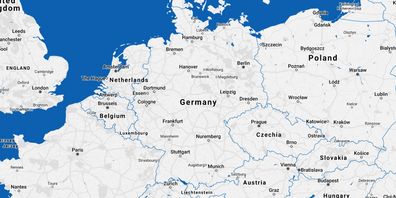
Map material from the free geographic information system OpenStreetMap. The DAAD explicitly does not adopt the information provided there (names, boundaries, etc.) in every case. No guarantee is given for the accuracy of this information.
Legend:
- Department
Basic information
- Percentage of teaching by practitioners
21.0%
- Percentage of teaching by practitioners, master's
37.0%
Cooperative Education
- Students in cooperative education
10
Support during the study entry phase
- Total score for support in the study entry phase
12/14 points
Job market- and career-orientation
- Bachelor theses in cooperation with work environment
86.9%
- Master theses in cooperation with work environment
55.0%
Research
- Cooperative doctoral degrees (in three years)
12
- Third party funds per professor
192,100 €
Further information provided by the department
Special features regarding teaching
Mechanical Engineering - digital: Digitalisation laboratory, green technology, artificial intelligence, driving simulator, VR glasses, graphics tablets, eye tracking in the Sales and Purchasing Lab and Materials for Future, Industry 4.0, autonomous systems, robotics, E-Mobility and virtual simulations - that is what sets us apart. More than 20 laboratories. Max. 45 students per semester. New professors (11) under 40 years of age in the fields of Smart Factory, AI, Additive Manufacturing, Digitalisation, Virtual Product Development of Plastic Components, Digital Sales, Data Science, Continuum Mechanics.
Special features regarding the international orientation
Double-degree options; English-language master's degrees; exchange of professors, special English-language courses for incoming students; the foreign student adviser is the ideal contact person for students interested in a stay abroad; many partnerships with international universities give students the opportunity to study and conduct research abroad; students benefit from very good contacts to regionally based, internationally operating companies and research institutions; Close collaboration with the Academic International Office.
Special features regarding the equipment
Short & ultra-short laser sources, green & UV lasers, CO2 marking lasers, 3D metal printers. High-speed & thermal-image cameras, infrared pyrometer. Cold-chamber die casting machines, 3D computer tomographs, 20 MAGMASOFT workstations, 4- to 6-axis industrial robots, 3D scanners. Ultrasonic scanning microscope, microscopes, vibration magnetometer, battery test benches. 5-axis, high-speed milling machine. Drive & total vehicle test bench, E-Bike test bench. Coordinate gauge incl. 90 software licenses. Injection moulding machine Laser cutter, driving simulator, VR glasses, graphic tablets. 9 Specialist databases, PC pools
Special features regarding research and development
The most research-intensive department of the most research-intensive university in Ba-Wü. Research building: ‘Zentrum innovativer Materialien & Technologien f effiziente elektr. Energiewandler-Maschinen’ (ZiMATE): 8 of 10 academics are from the department. 3D printing with moon dust with the ESA. Research institutions:Among other things, Institut für Materialforschung, Gießereitechnologie Aalen, Laserapplikations-Zentrum, Institute for Polymer Science and Processing, Institut für Innovative Oberflächen, Institut für Antriebstechnik Aalen, smart materials and intelligent production technologies. Audi e-tron electrical test vehicle
Support for founders
Start-up initiative stAArt-UP!de (workshops, seminars, lectures...). Start-up founders talk (live interviews with the self-employed. In summer semester 2021, the start-up series celebrated its 50th anniversary). Founding radar of the Stifterverband: Aalen University in first place for the first time in the category of medium-sized universities. EU-funded Innovation Centre for student start-ups at HSAA: Free use of the shared student office, counselling, contact brokering, meeting rooms, machine hall. Monthly ‘start-up founders’ evening’ at INNO-Z (from mechanical engineering: NEXTBASIN, self-cleaning basin).
Other special features
Virtual desktop infrastructure; Annual interdisciplinary student project "Formula Student electric"; Large number of regular industry colloquia, Exolorhino: Workshop for young researchers. Guest lectures (e.g. ‘Data Science and Consulting in Action’, discussion forum on ‘Product Service Life and Sustainability’). Online excursions during the coronavirus pandemic. Awarded by studycheck.de: ‘Digital studies – we’re ready’ and 3rd place among the most popular universities in Germany 2021.
Information on access restrictions
Materials Science / Engineering
Facts
- Total number of students at the department
270
- Number of master degree students (w/o teacher qualification)
90
Students' assessments on undergraduate, presence-learning-courses
- Teacher support
- Support in studies
- Courses offered
- Study organisation
- Exam organisation
- Digital teaching elements
- Laboratory internships
- Offers for career orientation
- Support during practical semester
no data
- Rooms
- Library
- IT-infrastructure
- Overall study situation
no data
- Return rate of the questionnaires
22
Students' assessments on consecutive master's degree courses
- Teacher support
- Support in studies
- Digital teaching elements
- Courses offered
no data
- Study organisation
- Transition to Master's studies
- Overall study situation
- Return rate of the questionnaires
15
Mechanical Engineering
Facts
- Total number of students at the department
820
- Number of master degree students (w/o teacher qualification)
170
Students' assessments on undergraduate, presence-learning-courses
- Teacher support
- Support in studies
- Courses offered
- Study organisation
- Exam organisation
- Digital teaching elements
- Laboratory internships
- Offers for career orientation
- Support during practical semester
- Rooms
- Library
- IT-infrastructure
- Overall study situation
- Return rate of the questionnaires
93
Students' assessments on consecutive master's degree courses
- Teacher support
no data
- Support in studies
no data
- Digital teaching elements
no data
- Courses offered
- Study organisation
no data
- Transition to Master's studies
- Overall study situation
- Return rate of the questionnaires
15
Legend
Groups
green
yellow
blue
not specified
Acronyms
(S) = Students' judgements
(F) = Facts
(P) = Professors' judgements
MatSE = Materials Science / Engineering
ME = Mechanical Engineering
Units
Value in percent
Value in points
Euro
Thousand Euro
Last Update 2022: Data collected by the
CHE Center for Higher Education
