


CHE University Ranking
Filter for projects
Mechanical / Materials / Process Engineering, Department
Fakultät für Maschinenbau
Gottfried Wilhelm Leibniz Universität Hannover
Fakultät für Maschinenbau
An der Universität 1
D-30167 Hannover
Telephone: +49 511 762-4165
https://www.uni-hannover.de
Uni Hannover
Department on the internet
Online application
Student body
An der Universität 1
D-30167 Hannover
Telephone: +49 511 762-4165
https://www.uni-hannover.de
Uni Hannover
Department on the internet
Online application
Student body
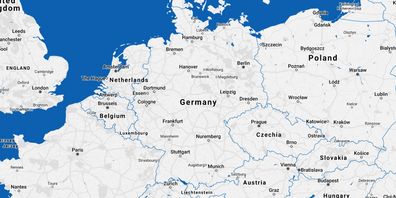
Map material from the free geographic information system OpenStreetMap. The DAAD explicitly does not adopt the information provided there (names, boundaries, etc.) in every case. No guarantee is given for the accuracy of this information.
Legend:
- Department
Basic information
- Percentage of teaching by practitioners
1.0%
- Percentage of teaching by practitioners, master's
3.0%
Support during the study entry phase
- Total score for support in the study entry phase
6/14 points
Job market- and career-orientation
- Bachelor theses in cooperation with work environment
no data
- Master theses in cooperation with work environment
no data
Research
- Third party funds per academic
364,100 €
- Doctorates per professor
4
Further information provided by the department
Special features regarding teaching
The degree courses are characterised by diverse, research-oriented teaching that supplements the mandatory courses with a varied range of 20 specialisation areas and soft skills. In practicals/tutorials, the students are given expert assistance to extend their knowledge. The quality of teaching is checked by means of regular evaluations and suggestions from students are implemented. External teaching staff from industry add to the practical aspect of the studies. We offer extensive study areas (some of which are actively supervised) with approx. 400 workspaces.
Special features regarding the international orientation
Continual integrative establishment of the new internationalisation strategy; extensive global network, numerous international collaborations; double degree with St. Petersburg Polytechnic University; financial support for stays abroad (Ulderup scholarship); Integration of research focus areas; close links with industry partners (Conti, VW, MTU); special language courses with a technical focus; extensive guidance and support services; expansion of the range of courses taught in English; paid international work placements are coordinated
Special features regarding the equipment
Numerous excellently equipped laboratories allow students to conduct tests professionally. The lecture rooms are equipped with the necessary technical aids such as digital projectors, microphone facilities, whiteboards and interactive whiteboards. The courses are sensibly supported through the StudIP system thus making teaching materials digitally accessible. There are extensive CIP rooms equipped with state-of-the-art technology. These can be used to host multimedia events in addition to their use as student workstations.
Special features regarding research activities
Our 18 institutes work on numerous funded research projects. Junior academics are actively involved in various Research Training Groups, Collaborative Research Centres and Transregio projects, Clusters of Excellence, Research Units and Priority Programmes and in DFG (German Research Foundation) research and industry collaborations. This link to research also enables students to participate actively as part of project work, coursework and final theses. In addition, there are eight interdisciplinary research centres, each with their own projects.
Further information on research activities
Biotechnology
Facts
- Total number of students at the department
150
- Number of master degree students (w/o teacher qualification)
150
Environmental Engineering
Facts
- Total number of students at the department
120
- Number of master degree students (w/o teacher qualification)
no data
Mechanical Engineering
Facts
- Total number of students at the department
2,630
- Number of master degree students (w/o teacher qualification)
1,380
Students' assessments on undergraduate, presence-learning-courses
- Teacher support
- Support in studies
- Courses offered
- Study organisation
- Exam organisation
- Digital teaching elements
- Research orientation
- Offers for career orientation
- Rooms
- Library
- IT-infrastructure
- Laboratories
- Overall study situation
- Return rate of the questionnaires
50
Students' assessments on consecutive master's degree courses
- Teacher support
- Support in studies
- Digital teaching elements
- Courses offered
- Study organisation
- Transition to Master's studies
- Research orientation
- Overall study situation
- Return rate of the questionnaires
45
Legend
Groups
green
yellow
blue
not specified
Acronyms
(S) = Students' judgements
(F) = Facts
(P) = Professors' judgements
BT = Biotechnology
EnvE = Environmental Engineering
ME = Mechanical Engineering
Units
Value in percent
Value in points
Euro
Thousand Euro
Last Update 2022: Data collected by the
CHE Center for Higher Education
