Two students in library

CHE University Ranking

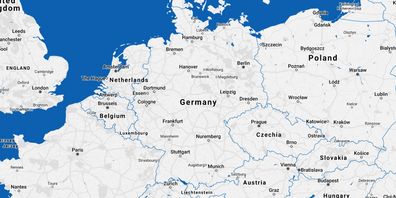
Map of Germany

Activate DAAD map

To activate the map, click on the "Show map" button. We would like to point out that data will be transmitted to OpenStreetMap after activation. You can find out more in our privacy policy. You can revoke your consent to the transmission of data at any time.

Map material from the free geographic information system OpenStreetMap. The DAAD explicitly does not adopt the information provided there (names, boundaries, etc.) in every case. No guarantee is given for the accuracy of this information.

Legend:

  • Department

Cooperative Education

Students in cooperative education

10

Support during the study entry phase

Total score for support in the study entry phase

8/16 points

International orientation

Outgoing students

no data

Job market- and career-orientation

Percentage of teaching by practitioners

22.0%

Percentage of teaching by practitioners, master's

no data

Bachelor theses in cooperation with work environment

85.3%

Master theses in cooperation with work environment

85.0%

Research

Cooperative doctoral degrees (in three years)

1

Third party funds per professor

15,500 €

Further information provided by the department

Special features regarding teaching in the bachelor's degree programme

The special features of the department in teaching include practical course content with many examples from industry and business and the practical implementation of what students have learned in exercises and laboratory work. Projects and competitions, for example in the field of robotics, are another special feature of the degree programmes.

Special features regarding teaching in the master's programmes

The special features of the department in teaching include practical course content with many examples from industry and business and the practical implementation of what students have learned in exercises and laboratory work. Projects and competitions, for example in the field of robotics, are another special feature of the degree programmes. In the Master's programme, importance is also placed on enabling students to experience research-based learning and apply their skills in independent projects.

Special features regarding the international orientation

Frankfurt University is a member of the U!REKA European University, a transnational alliance of six universities of applied sciences and 24 partners who want to work together to shape the transition to climate-neutral societies. Together with our international partners, we have been implementing projects in research, academic studies and teaching since 2016.

Special features regarding the equipment

The department has 46 laboratories in the following areas: Electrical engineering, mechatronics, mechanical engineering, process engineering, natural sciences and computer science. To provide researchers and teaching staff with the resources they need to work with various AI technologies, a server cluster was set up. This has very high computing power in the form of graphical processing units. There is a modern computer laboratory in which a high-performance virtualisation environment is available for use for projects, research activities and teaching.

Special features regarding research and development

More than 80 professors with extensive and diverse experience in business and industry conduct research in their specific disciplines in the department. Numerous modern work rooms and laboratories are at their disposal. In the department, however, research also means involving students at an early stage to familiarise them comprehensively with the methodology and implementation of research projects. This gives them the opportunity to pursue a further academic degree after a first professionally qualifying degree.

Other special features

In order to increase the proportion of women in STEM subjects and to enable all students to study well in their diversity, the STEM coordination team under the umbrella of the Equal Opportunities and Diversity Unit and the Women and Equal Opportunities Officer supports equal access to STEM subjects for all genders. The STEM coordination team is committed to a sensitive and encouraging approach to the heterogeneity of students in STEM programmes. A sustainability strategy has also been in place at the university since 2021!

Further information on research activities

Further information about study entry phase

Information on access restrictions

Website of the Student Council

online-application

Materials Science / Engineering

Facts

Total number of students at the department

300

Number of master degree students (w/o teacher qualification)

no data

Mechanical Engineering

Facts

Total number of students at the department

580

Number of master degree students (w/o teacher qualification)

90

Students' assessments on consecutive master's degree courses

Teacher support

no data

Not specified
Support in studies

no data

Not specified
Digital teaching elements

no data

Not specified
Practical orientation in teaching

no data

Not specified
Courses offered

no data

Not specified
Study organisation

no data

Not specified
Transition to Master's studies

no data

Not specified
Research orientation

no data

Not specified
Support for stays abroad

no data

Not specified
Overall study situation

no data

Not specified
Return rate of the questionnaires

10

Legend

Groups

green

top group

yellow

middle group

red

bottom group
Not specified
not specified

Acronyms

(S) = Students' judgements

(F) = Facts

(P) = Professors' judgements

MatSE = Materials Science / Engineering

ME = Mechanical Engineering

Units

Value in percent

Value in points

Euro

Thousand Euro

Last Update 2025: Data collected by the CHE Center for Higher Education